Classic Spiral
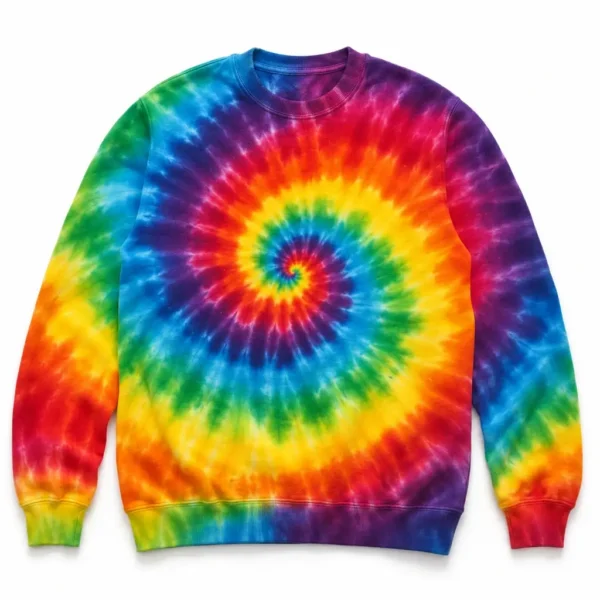
Bands of color curl around a single center. A tight spiral gives the crewneck more narrow bands, while a wider spiral leaves larger blocks of color.
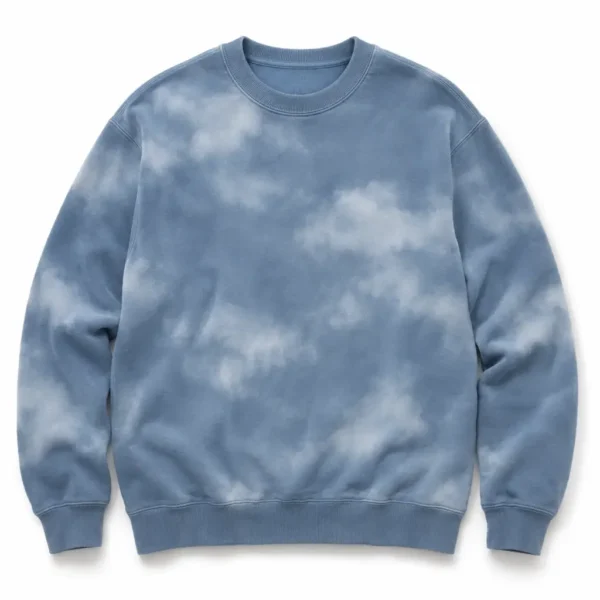
Tonal Cloud
Pale and dark shades of the same color blend into irregular clouds. The soft edges give a chest logo a quieter background.
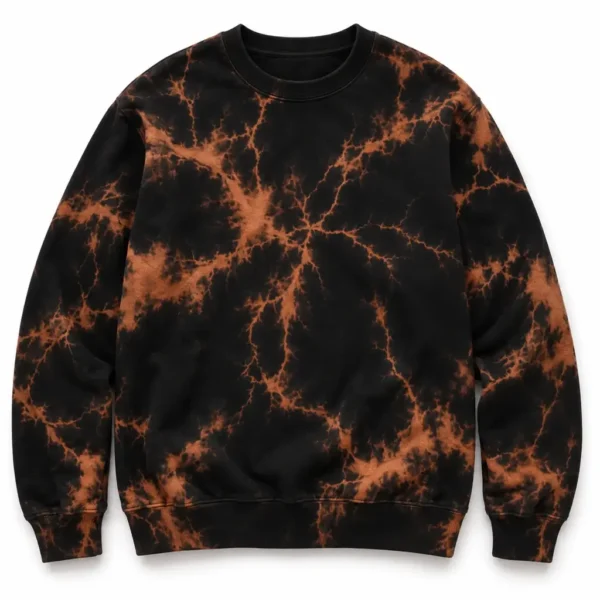
Reverse Tie-Dye
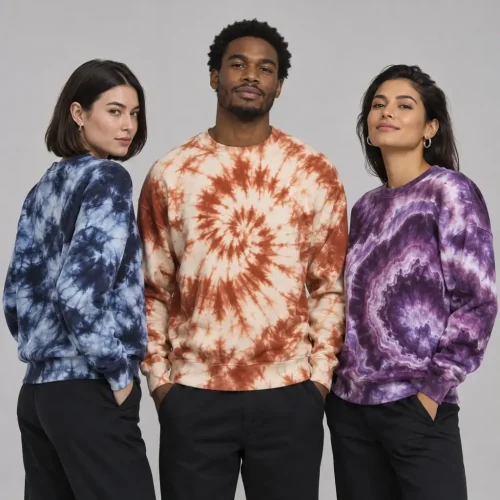
We lift color from selected areas of a dark sweatshirt. The original dye determines whether the lighter marks turn cream, copper, or another shade.
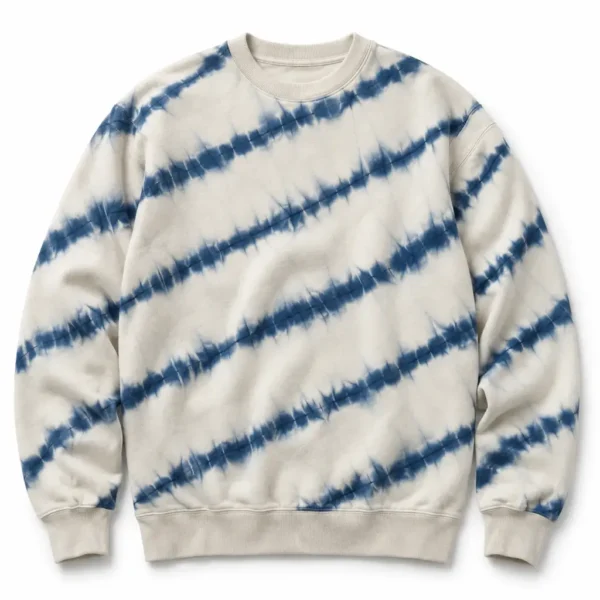
Folded Stripe
Fabric folds create bands with soft, uneven edges. The bands can run across the chest, down the body, or diagonally through the sleeves.
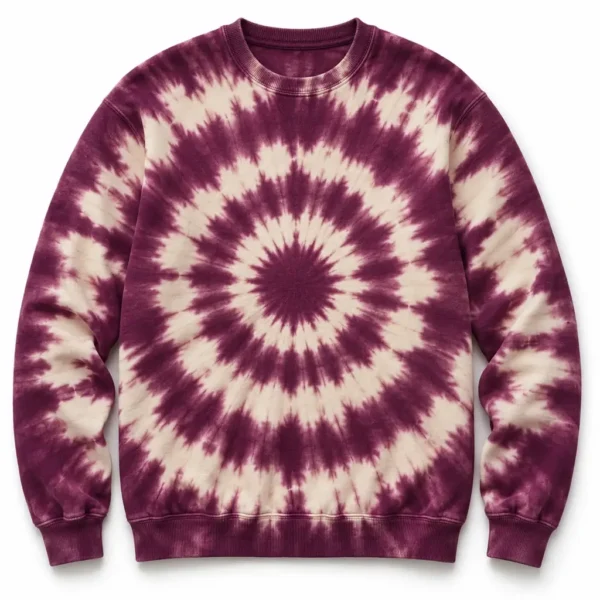
Bullseye or Sunburst
Rings spread outward from a single tied point. Narrow rings create a target shape, while wider bands leave more of each color visible.
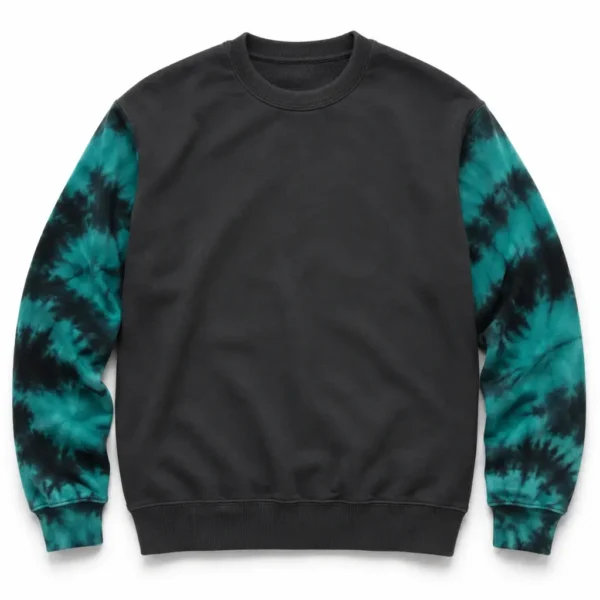
Sleeve-only Tie-Dye
Tie-dyed sleeves frame a solid body. The plain chest gives lettering and team crests a consistent background.
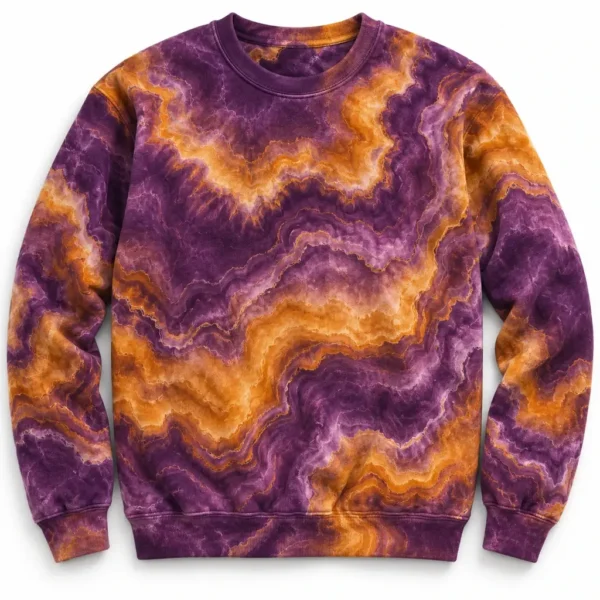
Geode
Narrow, uneven outlines surround pools of color. The layered bands resemble the cross section of a geode.
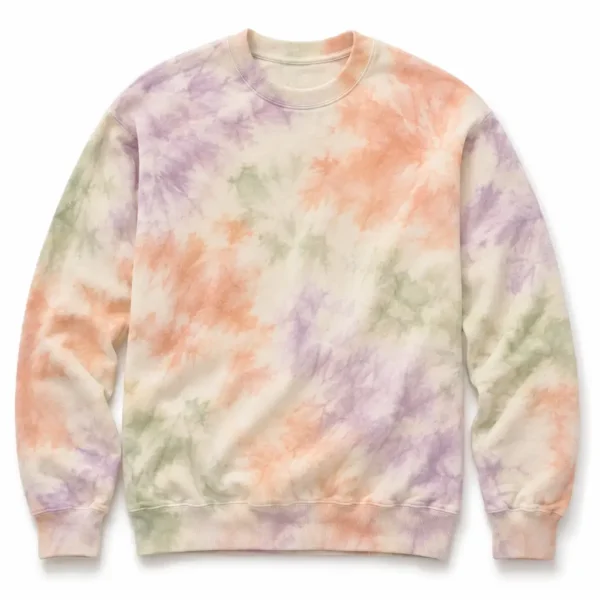
Watercolor Ice Dye
As ice melts, it carries dye through the folds and lets shades separate. The finished sweatshirt has soft edges and unexpected pockets of color.
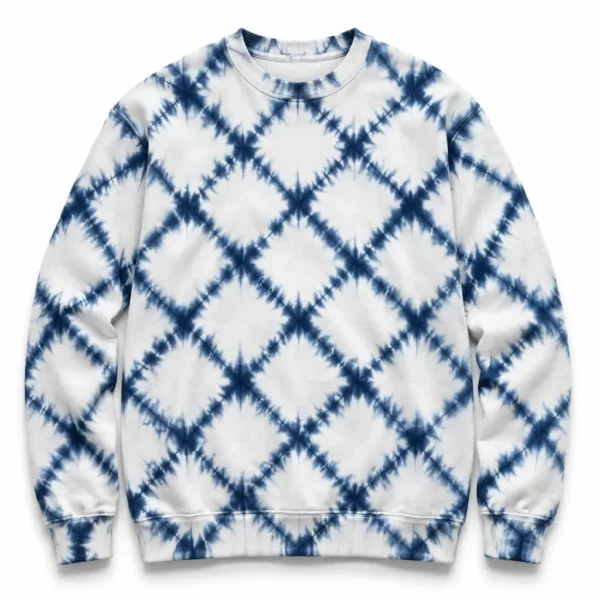
Geometric Shibori
We fold and clamp the fabric before dyeing it. The protected areas repeat across the sweatshirt as diamonds, squares, or other geometric shapes.
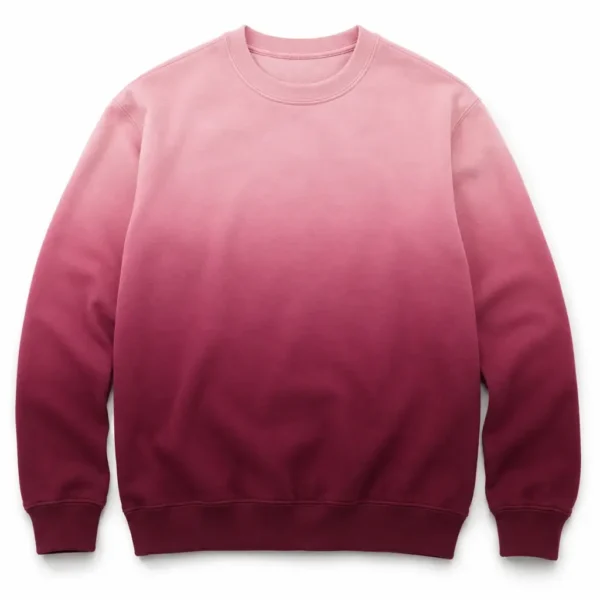
Ombré Dip-Dye
Dip-dyeing creates a gradual shift from light to dark along the garment. The smooth fade offers a different look from the rings and folds of tied patterns.
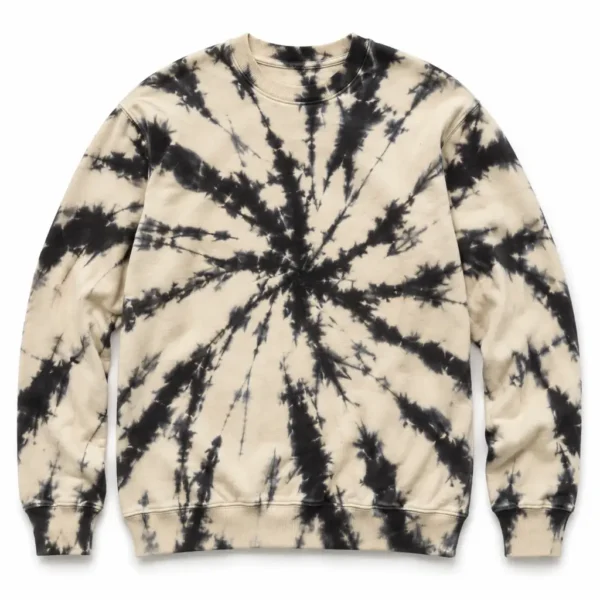
Spider Tie-Dye
Fine, branching lines radiate from one point like the spokes of a web. Dark lines over a light base make the shape easy to see.
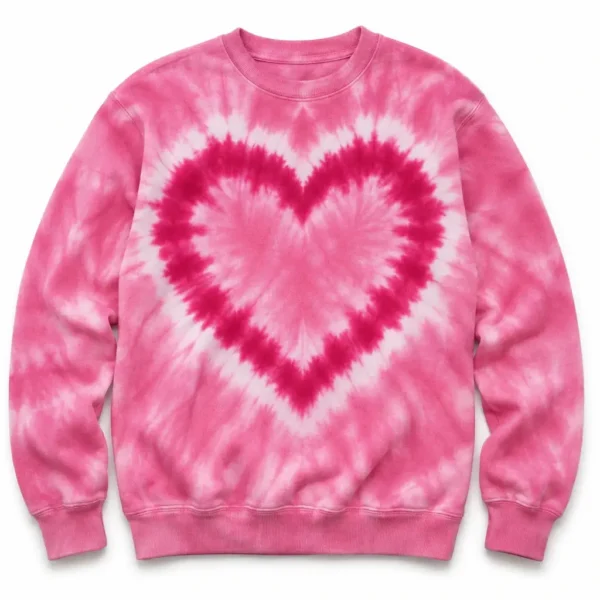
Heart Tie-Dye
A shaped fold places a heart on the front of the sweatshirt. Bands of lighter and darker dye trace the outline.
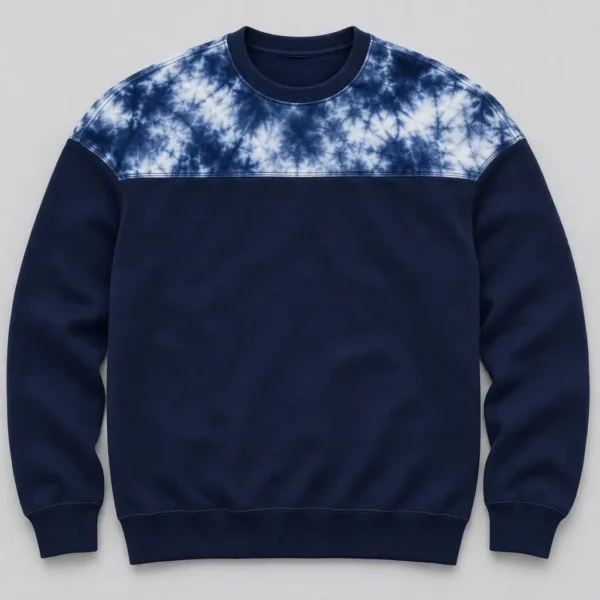
Tie-Dye Yoke Panel
We sew a tie-dyed panel across the upper chest and shoulders. A horizontal seam separates the dyed yoke from the solid body below.
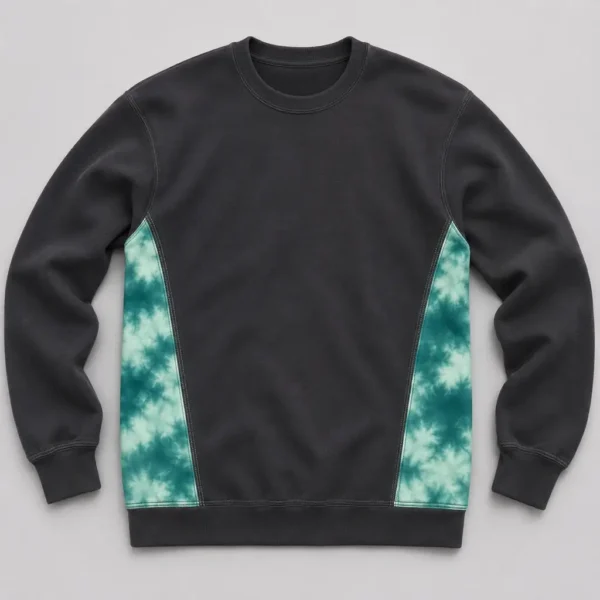
Tie-Dye Side Panels
Tie-dyed inserts run from the underarms to the hem on both sides. The center front stays solid for a chest logo or graphic.
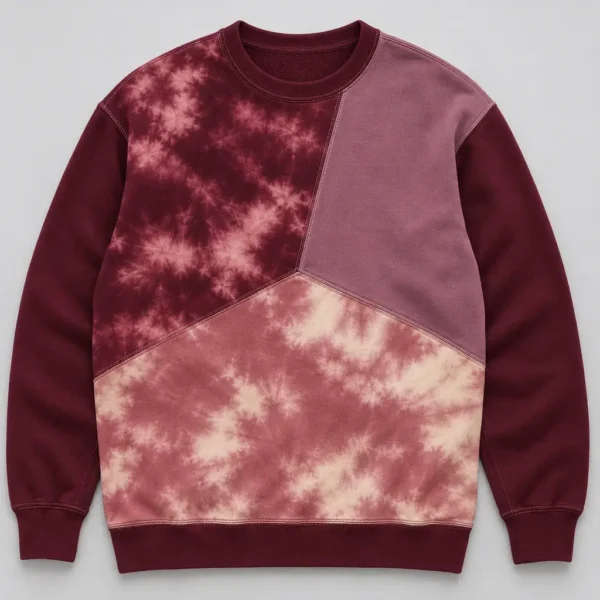
Multi-Panel Tie-Dye
We sew separately cut sections into the front. Each seam marks a change in color or pattern, so solid fabric and tie-dye can sit side by side.
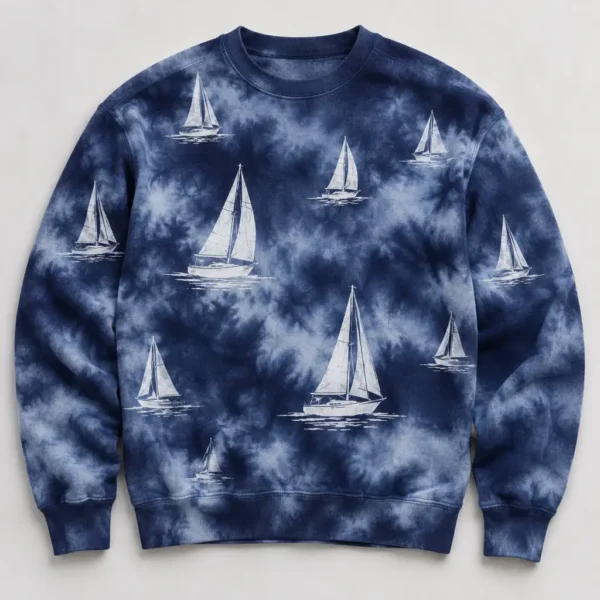
Screen Printing
We screen-print onto smooth fleece or French terry, using opaque ink to keep light logos visible over dark dye.
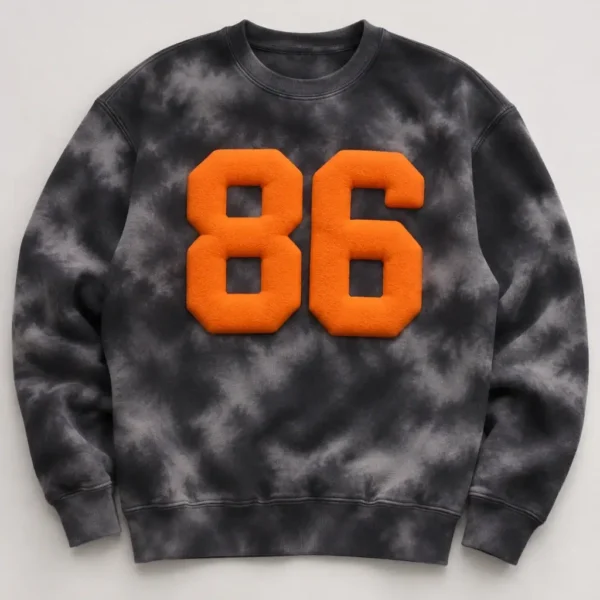
Puff Printing
Puff ink expands as it cures. Bold letters and numbers rise above the dye with rounded edges and a soft profile.
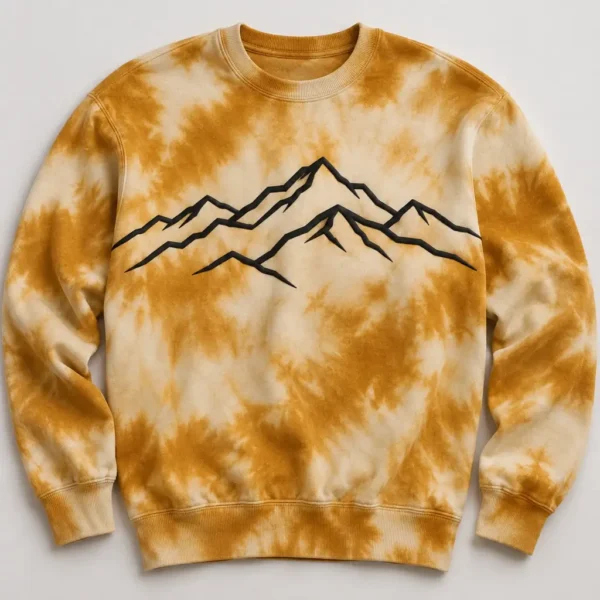
High-Density Printing
Layers of ink give a graphic height and a crisp, squared edge. A smooth outer face keeps the raised lines even.
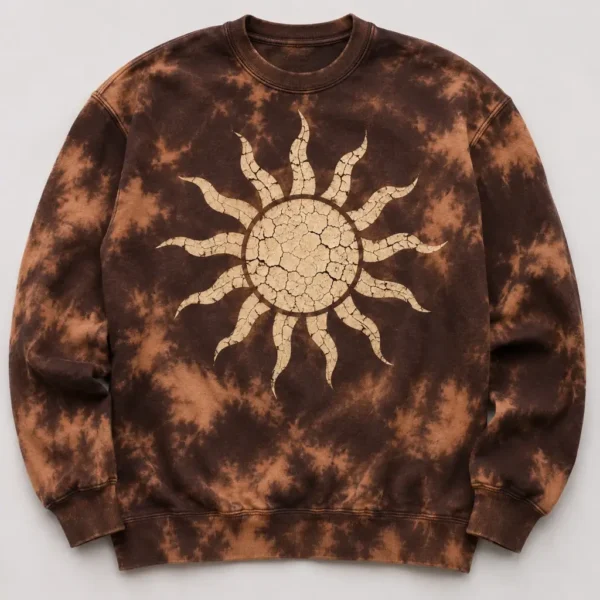
Crackle Printing
Fine cracks in the printed graphic let the tie-dye show through for a worn look.
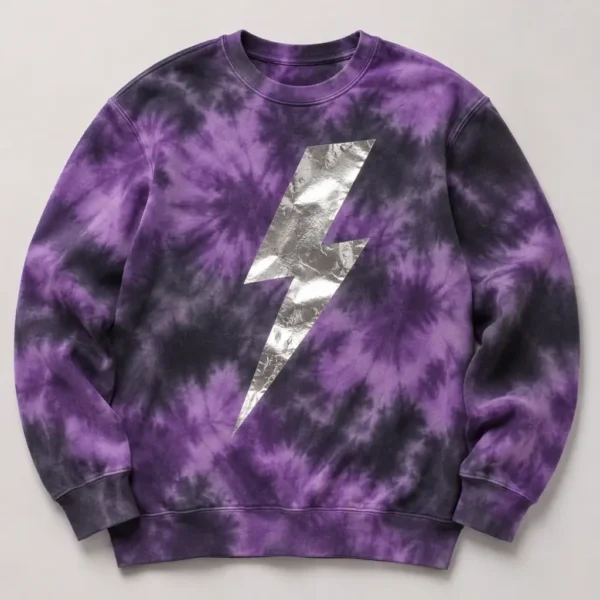
Foil Printing
Metallic foil bonds to a printed adhesive, giving the graphic a smooth, reflective surface.
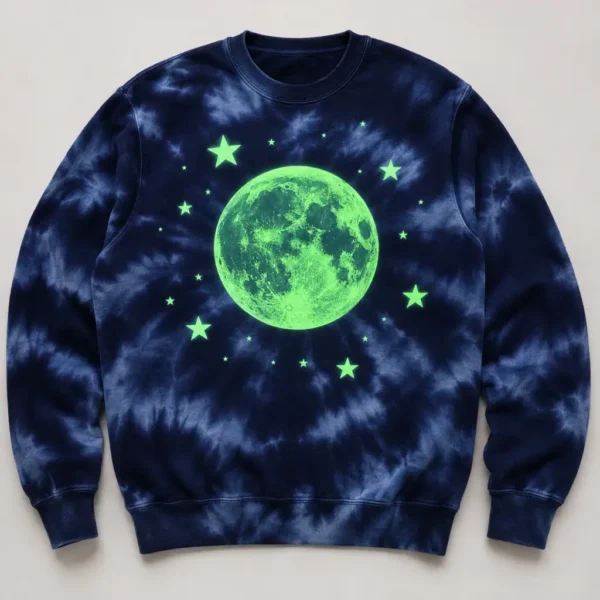
Glow-in-the-Dark Printing
The ink absorbs light, then glows when the sweatshirt moves into darkness.
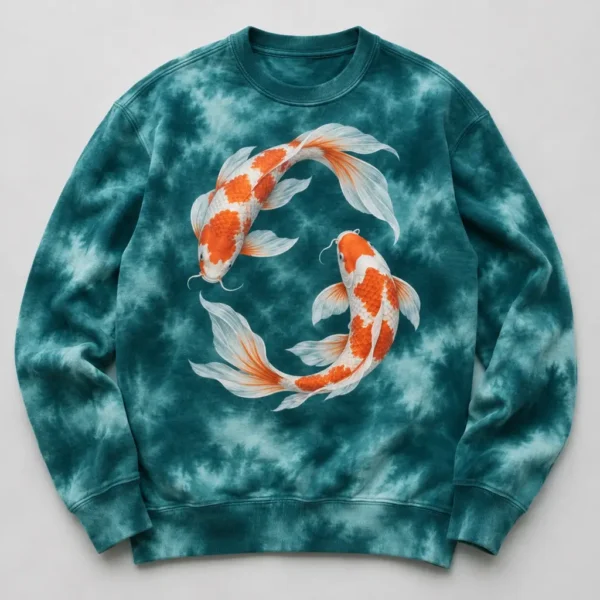
Direct-to-Film Transfers (DTF)
We heat-press artwork onto smooth fabric. A white backing keeps full-color details visible over the dye.
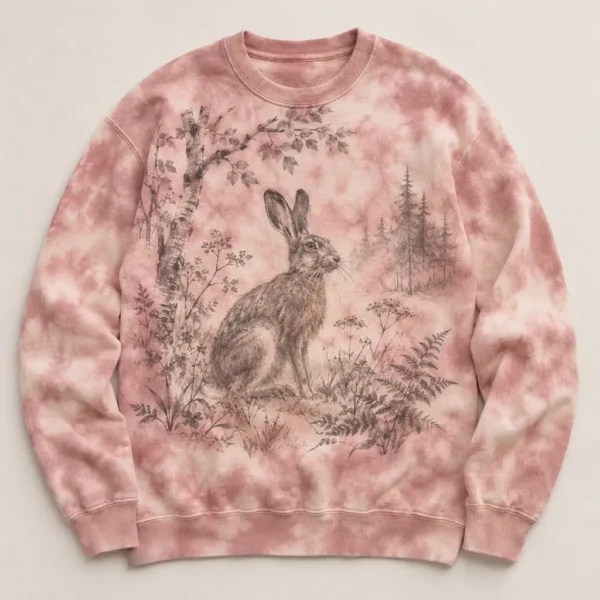
Direct-to-Garment Printing (DTG)
We print fine lines and shading directly onto smooth cotton. Polyester needs compatible ink and pretreatment.
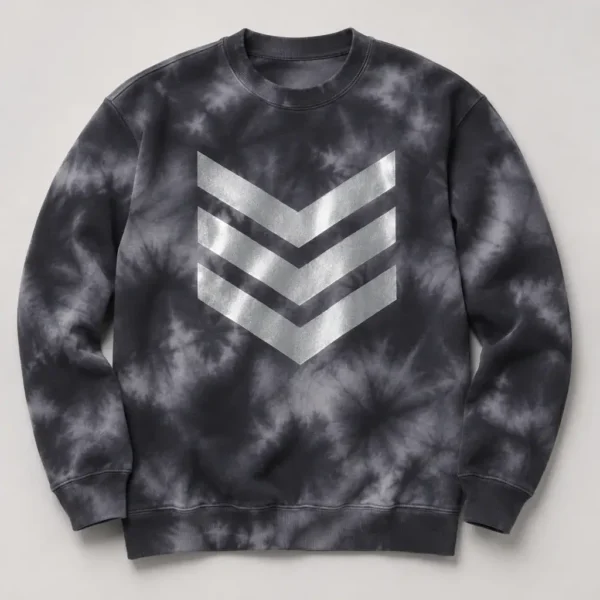
Reflective Heat-Transfer Vinyl
Cut reflective film gives names, numbers, and stripes sharp edges that catch direct light.
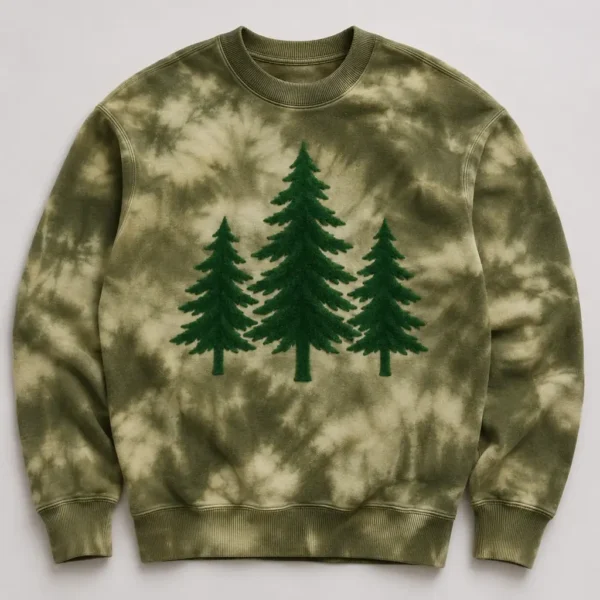
Flocked HTV
Short fibers give heat-pressed lettering a soft, velvet-like surface on smooth knits.
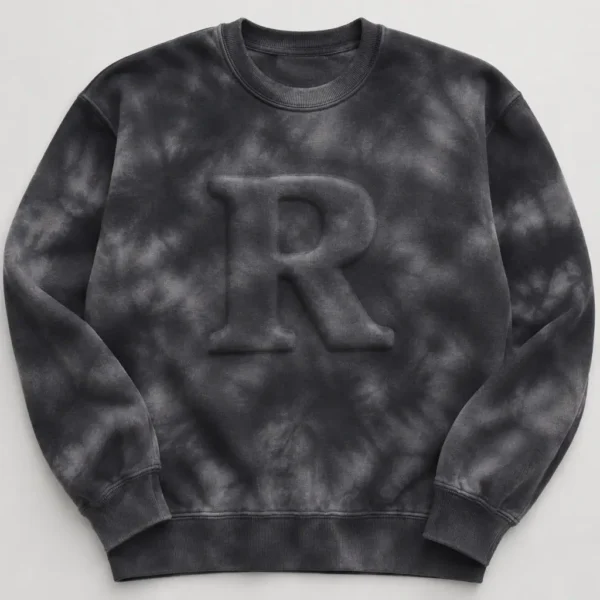
Embossing
A shaped tool raises a tonal logo from the fabric. A wash test shows how well it holds.
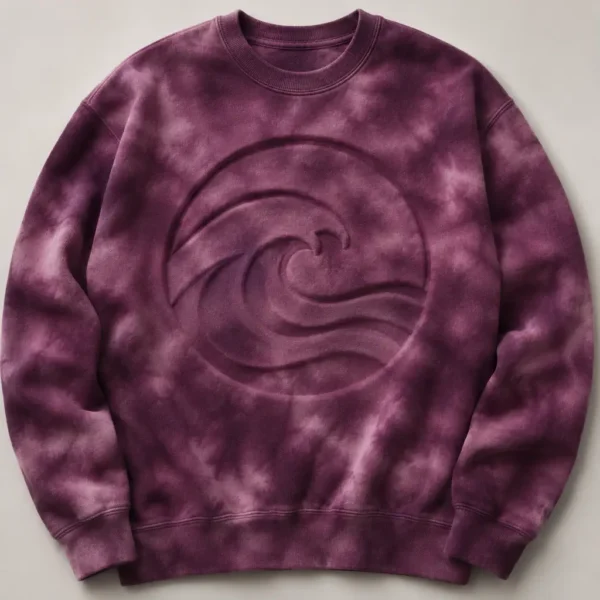
Debossing
A shaped tool presses the logo into the fabric. On deep pile, pressure can also mark the surrounding area.
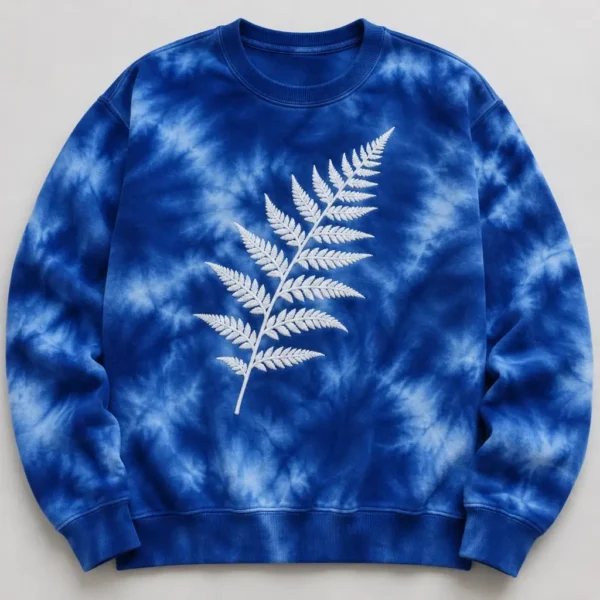
Flat Embroidery
We stitch the logo directly into the fabric, with backing to support softer knits.
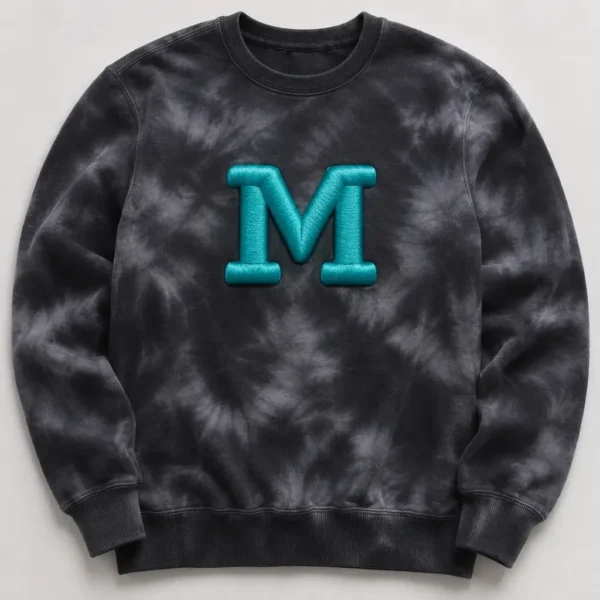
3D Puff Embroidery
Foam beneath dense stitches gives broad initials and bold lettering a raised, rounded shape.
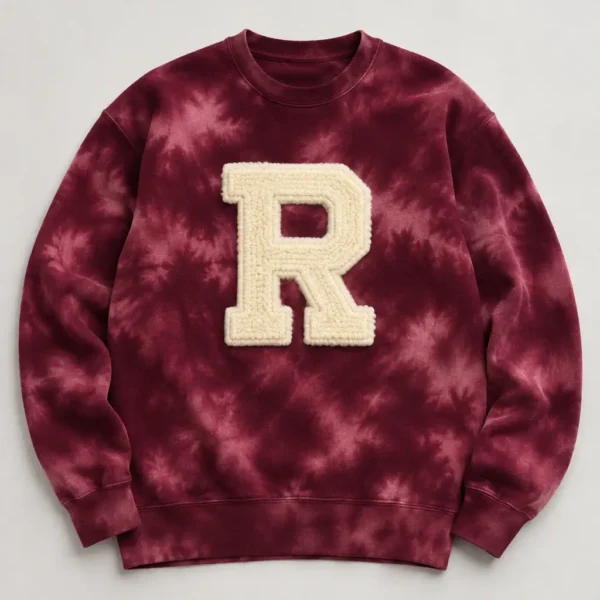
Chenille Embroidery
Loops of yarn give varsity letters and badges their thick, fuzzy surface.
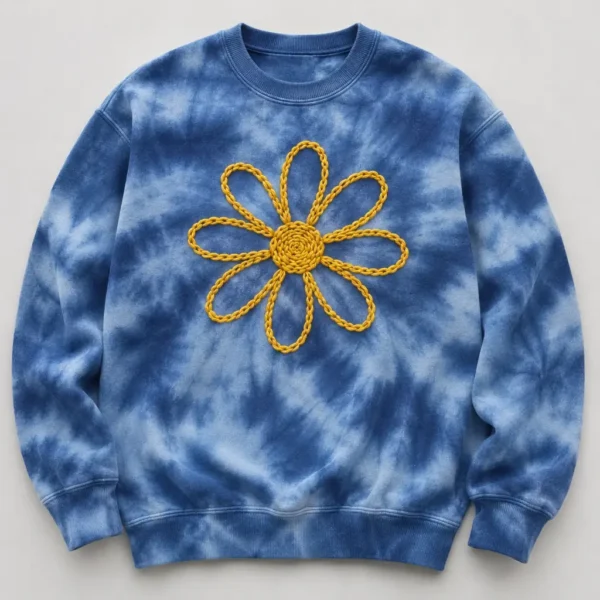
Chain-Stitch Embroidery
Interlocking loops form a textured line for script, floral outlines, and other line drawings.
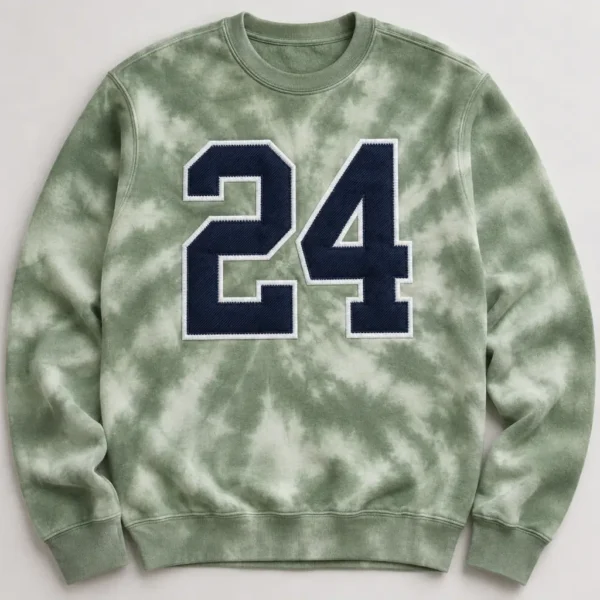
Appliqué and Tackle Twill
We stitch cut fabric letters and numbers onto the sweatshirt, giving team designs solid color and a defined outline.
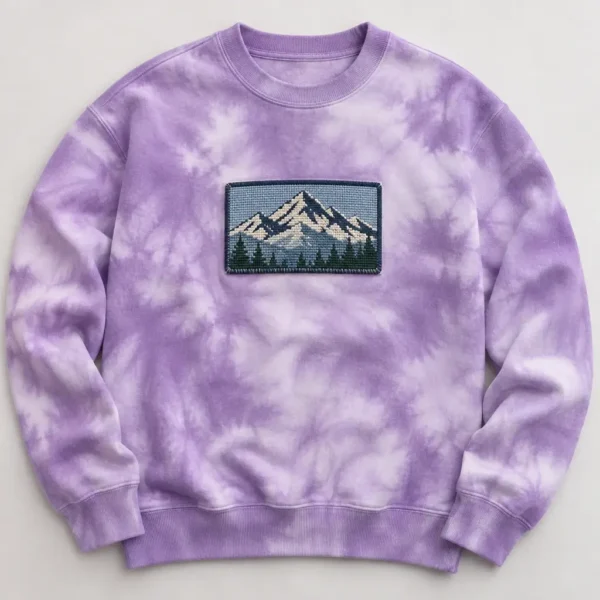
Woven Patches
Fine woven threads give small lettering a clear background of its own over the tie-dye.
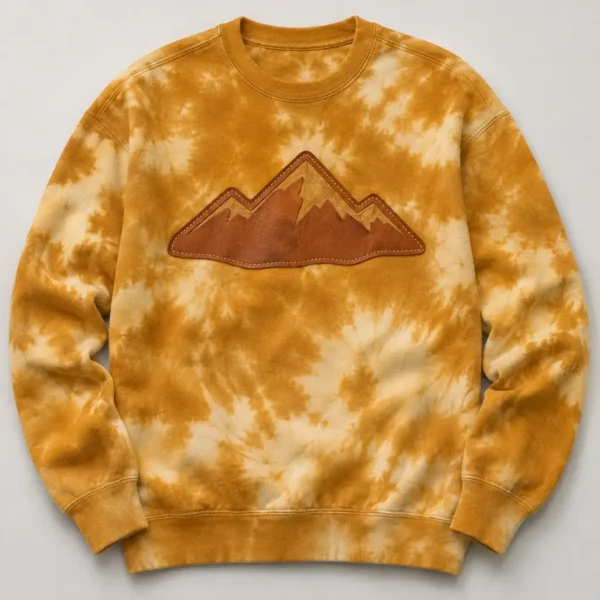
Leather Patches
A sewn leather or faux-leather badge gives the logo a smooth surface with a firm edge.
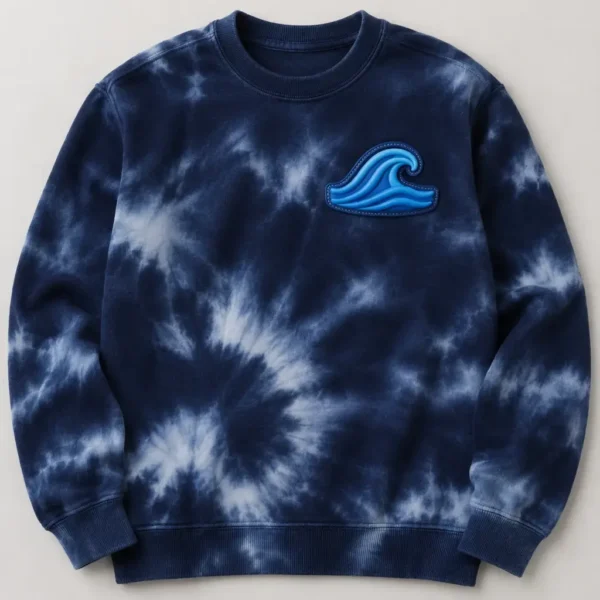
Molded Silicone or Rubber Patches
We attach the molded badge after dyeing so its raised details and solid colors stand out.
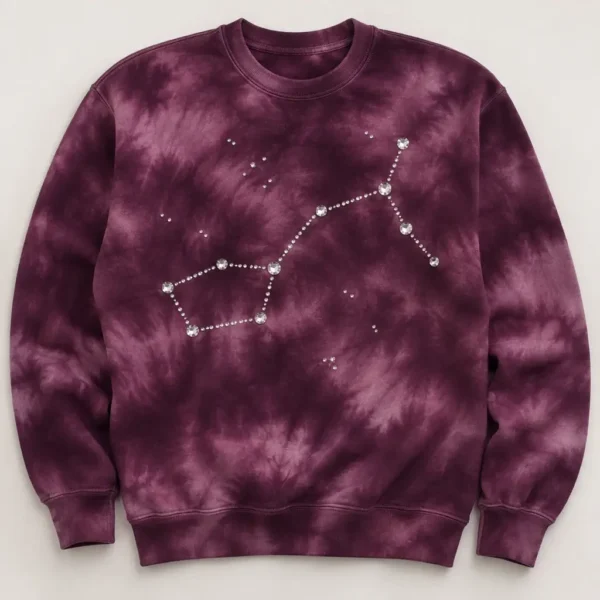
Rhinestones
Faceted stones add sparkle. Heat-set stones suit compatible smooth knits, while sew-on stones work on thicker textures.
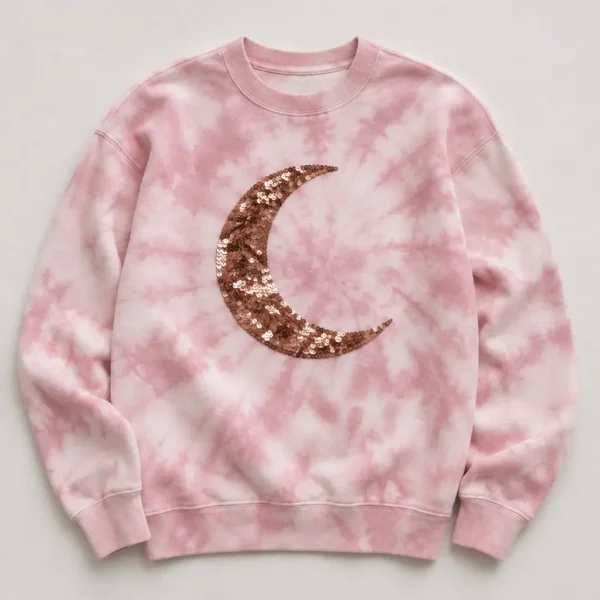
Sequins
Stitched sequins catch light as the fabric moves, whether scattered as accents or grouped into a motif.
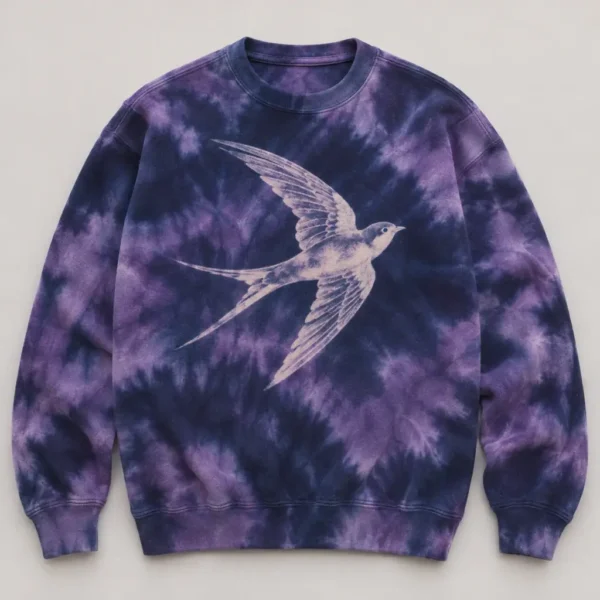
Discharge Printing
Discharge ink lifts compatible dyes from cotton, so a graphic can lighten to different shades across the pattern.
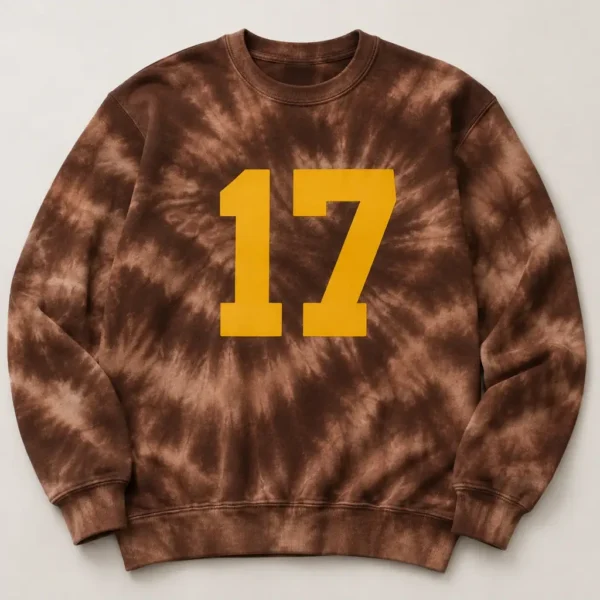
Heat-Transfer Vinyl
We heat-press names or numbers cut from colored film, so each sweatshirt can carry a different name.
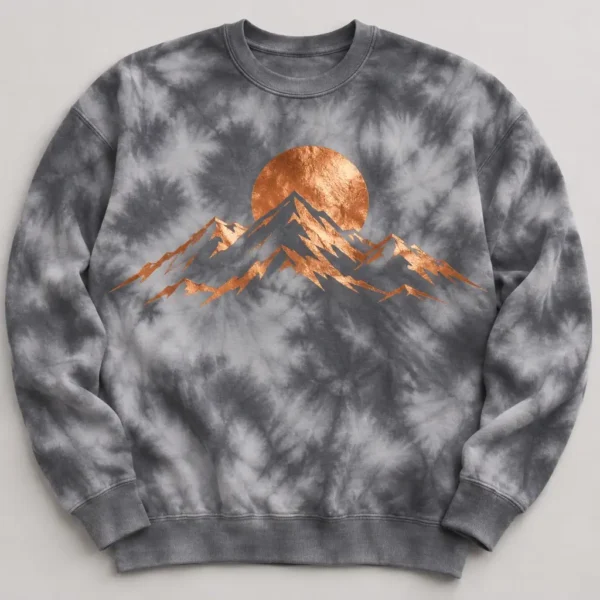
Metallic Ink Printing
Metallic particles give the print a soft gold, silver, or copper sheen over the tie-dye.
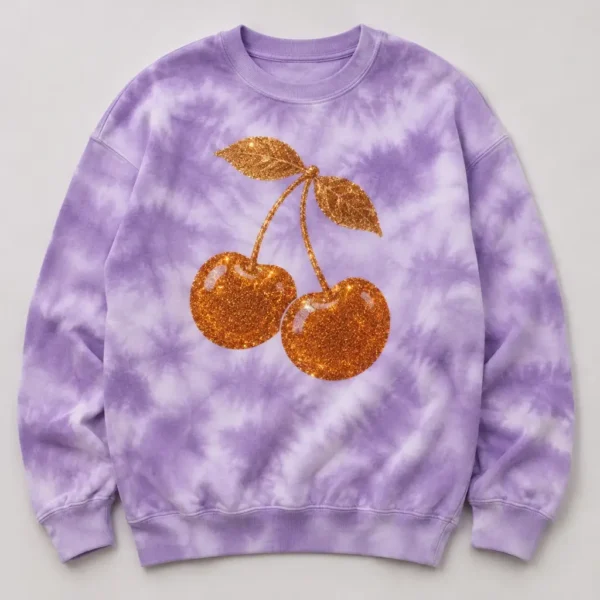
Glitter Printing
Glitter particles add sparkle that shows most clearly in broad shapes and bold lettering.
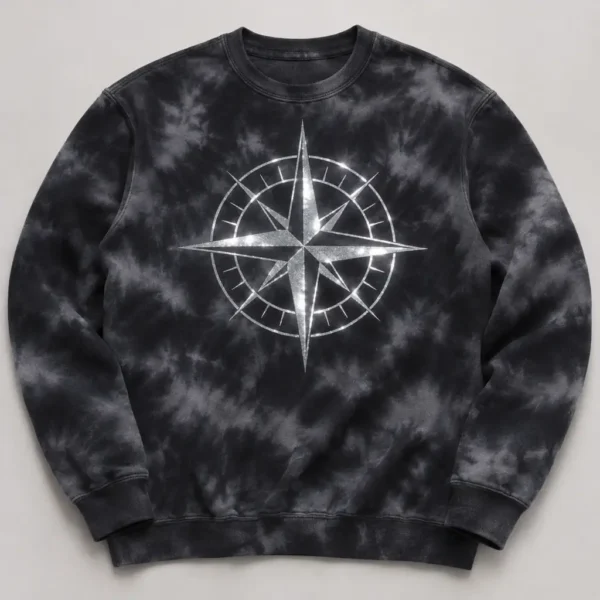
Reflective Screen Printing
Reflective ink sends light back toward its source, making the printed graphic stand out under direct light.
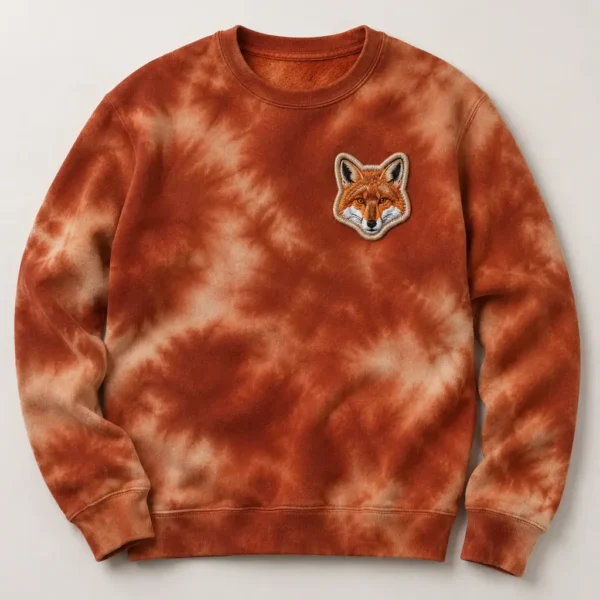
Embroidered Patches
We embroider a separate badge, then sew it onto the sweatshirt so its border frames the logo.
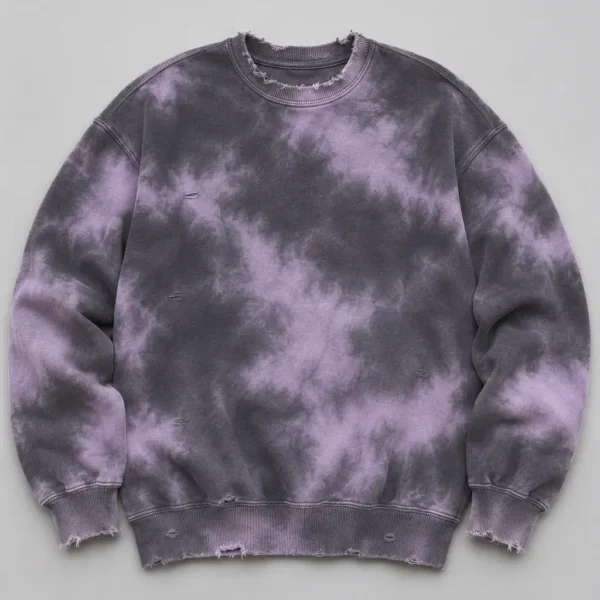
Distressing
Light fraying at the collar, cuffs, or hem gives the sweatshirt a worn edge.
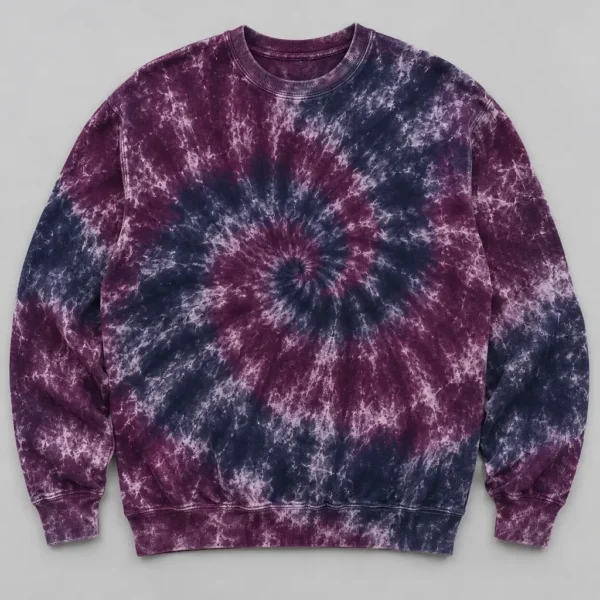
Acid Wash
Uneven pale flecks break up darker areas of the tie-dye for a mottled, high-contrast finish.
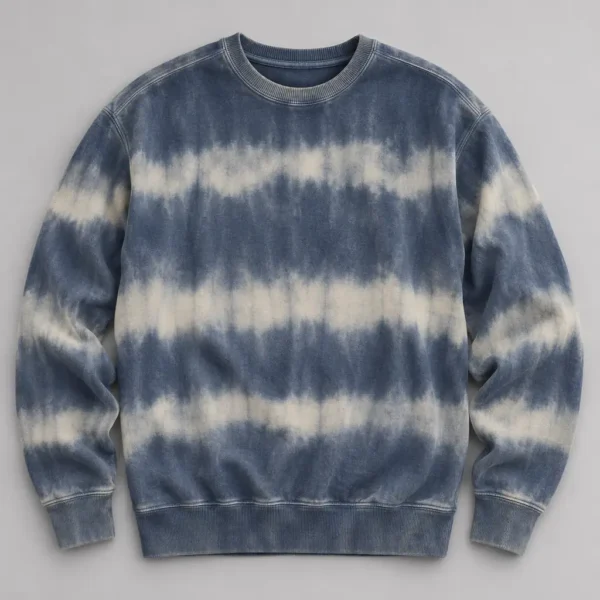
Stone Wash
Abrasion softens the surface and fades the dye, often leaving seams and ribs lighter than the body.
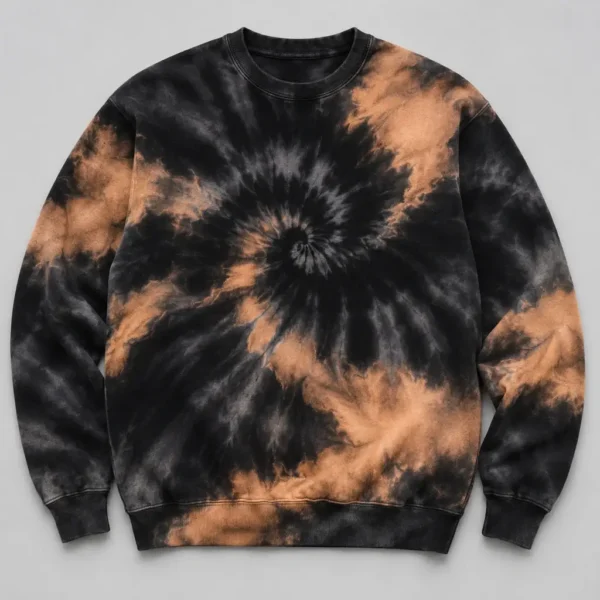
Bleach Wash
A bleach wash lightens the existing dye, revealing a softer shade or a warm contrast depending on the base color.

Cotton Fleece
Cotton fleece has a smooth outer face and a brushed inner layer. Cotton takes fiber-reactive dye, and a smooth cotton face supports screen printing, DTF, DTG, and embroidery.

Polyester Fleece
Polyester fleece needs dye made for synthetic fibers. Embroidery and sewn patches suit many fleece constructions. On smooth polyester, compatible heat transfers need a test for dye bleeding into light artwork.
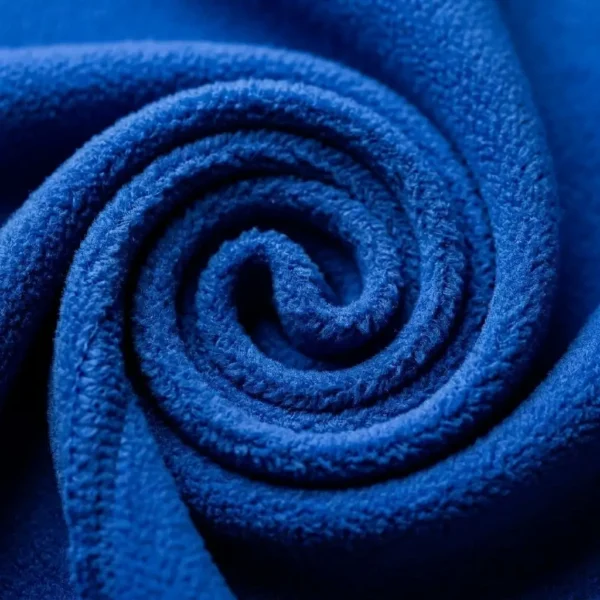
Polar Fleece
Polar fleece usually has a raised polyester pile on both sides. Embroidery or a sewn patch keeps a logo visible above the pile. The uneven surface makes fine prints and flat transfers harder to apply evenly.
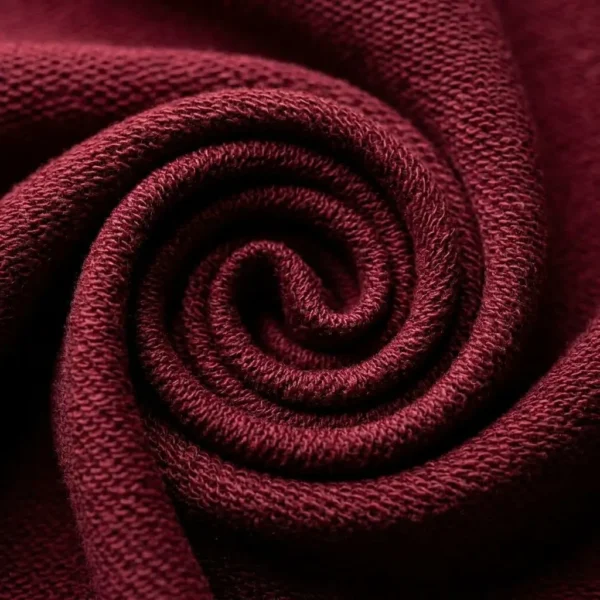
French Terry
Cotton French terry combines a smooth face with loops on the inside. It takes fiber-reactive dye and gives prints a flat surface. Blended French terry can take a softer shade.
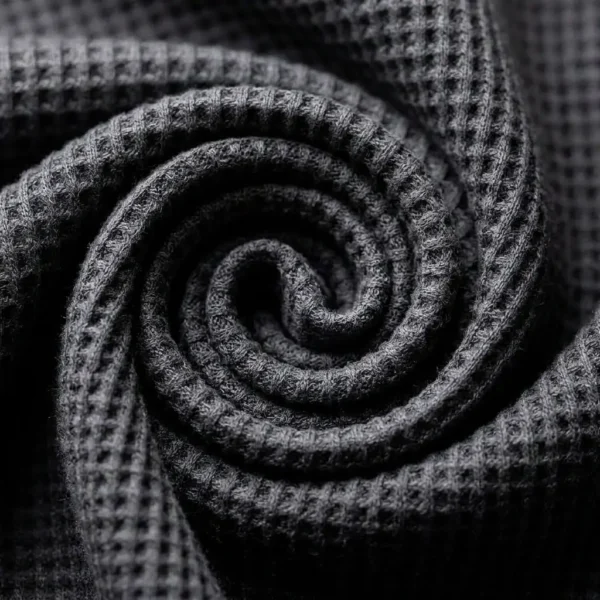
Thermal (Waffle Knit)
Cotton waffle knit takes reactive dye, while the raised grid adds texture. Embroidery and patches hold a small logo above the grid. Deep recesses can break up fine printed lines.
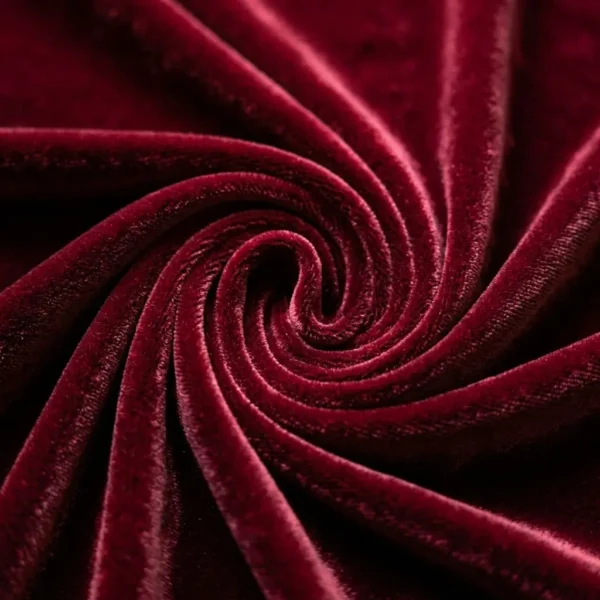
Velour
Velour has a short pile that changes sheen with the direction of the fibers. Cotton and polyester velour need different dyes. Embroidery and sewn patches suit the pile, while heat and pressure can leave marks.

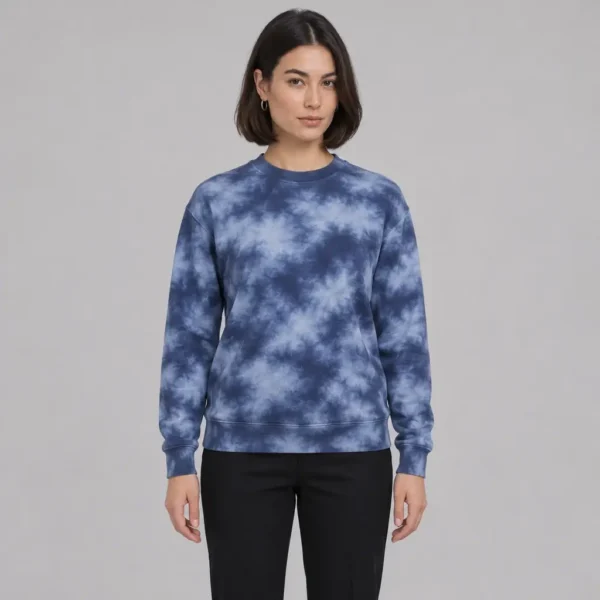
Regular / Classic Fit
A straight cut leaves everyday room through the chest and waist. The shoulders sit close to their natural position.
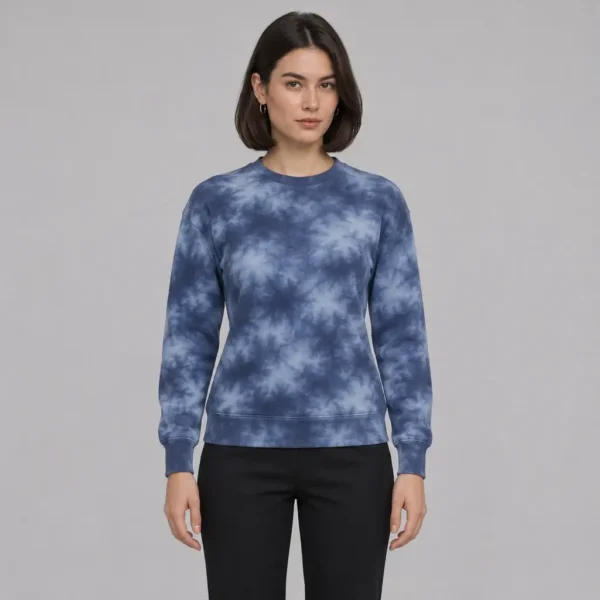
Semi-fitted Fit
Light shaping follows the waist while leaving space through the chest and sleeves.
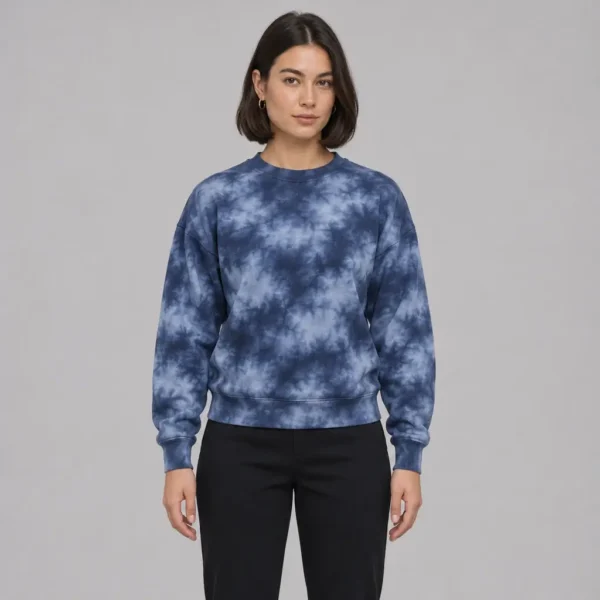
Athletic Fit
More room through the shoulders and upper chest tapers toward a closer-fitting waist.
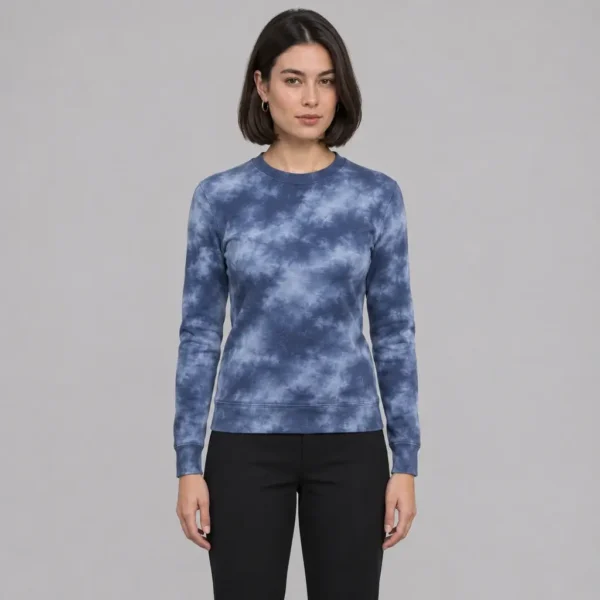
Slim Fit
A narrow body and close sleeves follow the wearer from the chest to the hem.
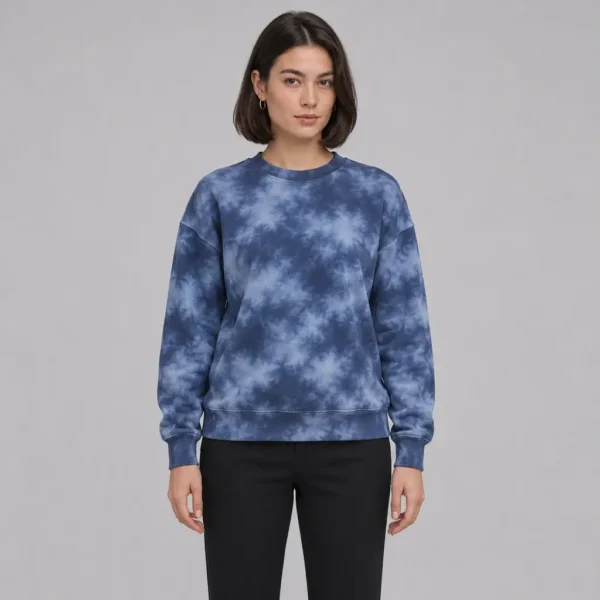
Relaxed Fit
Extra room through the chest and a slightly lower shoulder give the sweatshirt a softer drape.
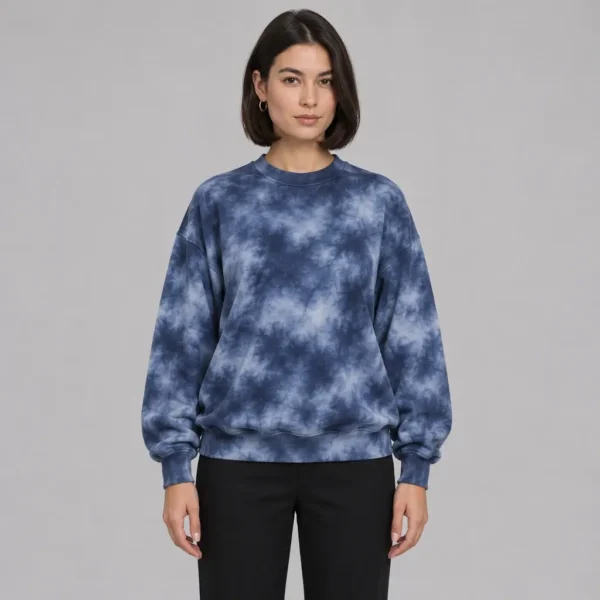
Loose Fit
A wider body and fuller sleeves leave room around the torso and hips for layering.
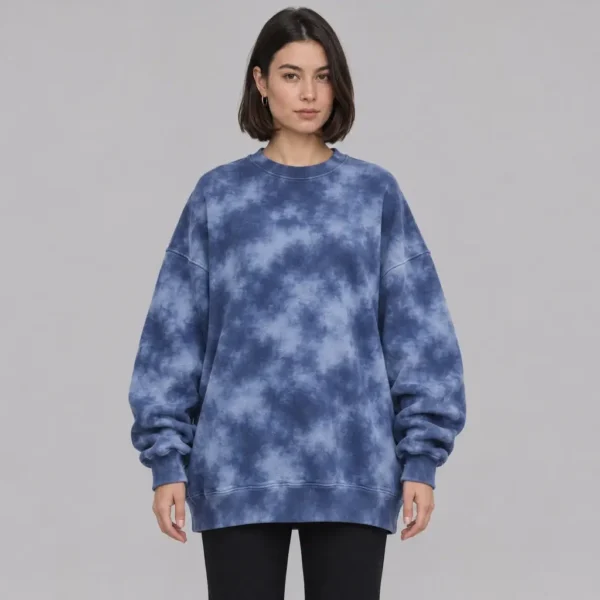
Oversized Fit
Deep dropped shoulders, long sleeves, and a wider body create the fullest silhouette in the range.
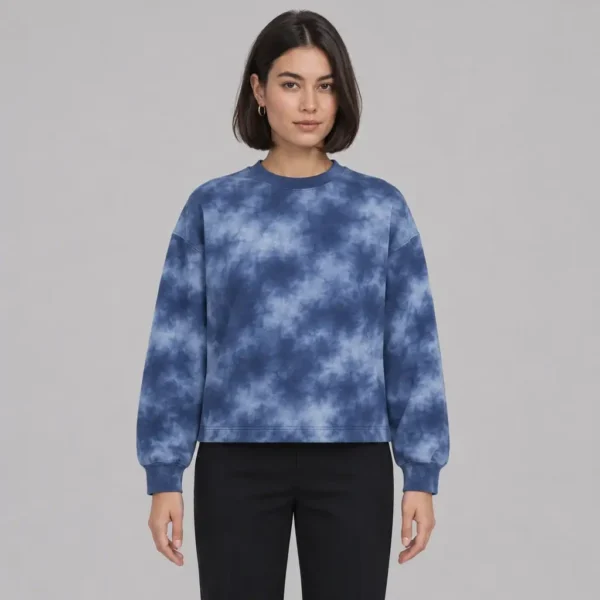
Boxy Fit
A broad chest, straight sides, and a shorter body create a square silhouette.
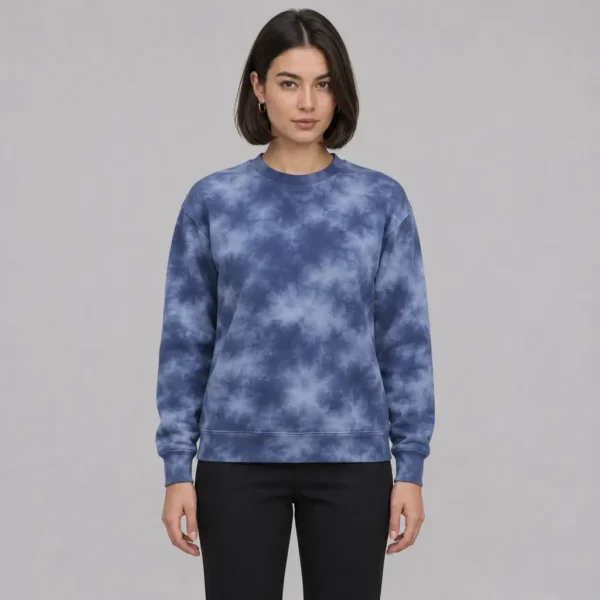
Regular
The hem sits around the hip for even coverage with jeans or sweatpants
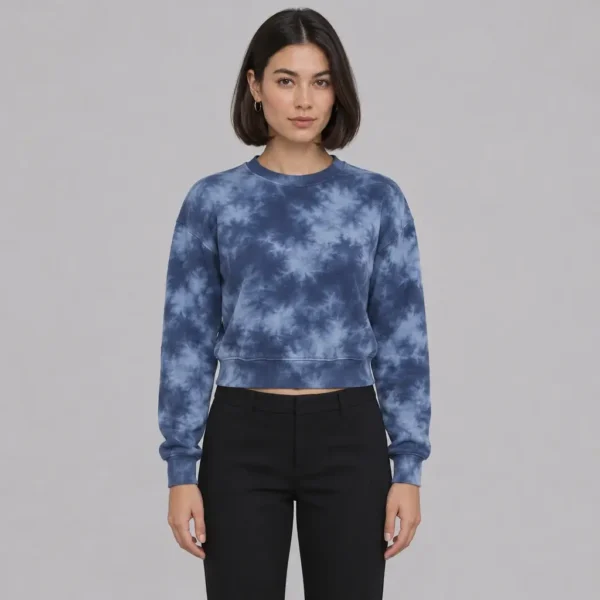
Cropped
The hem sits around the natural waist and pairs with high-rise bottoms.
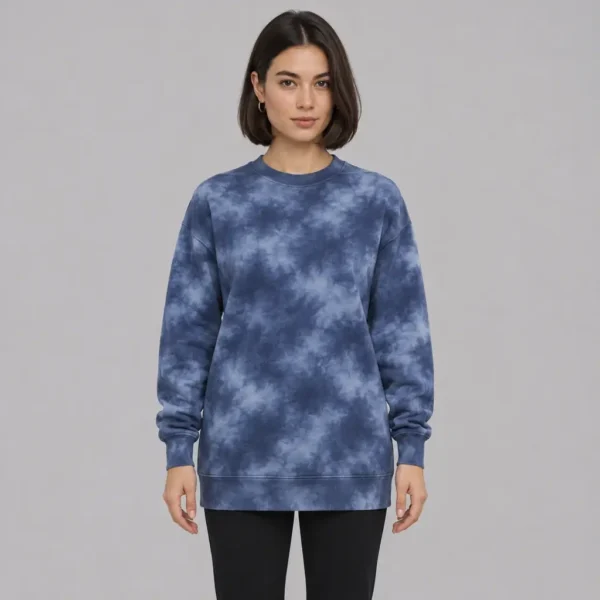
Long
The body extends below the hip and covers the seat.
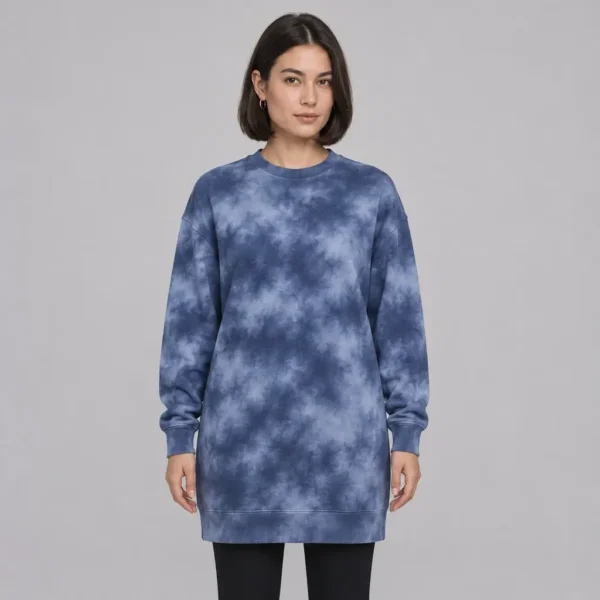
Extra Long / Tunic
The hem extends down the thigh for the most coverage.
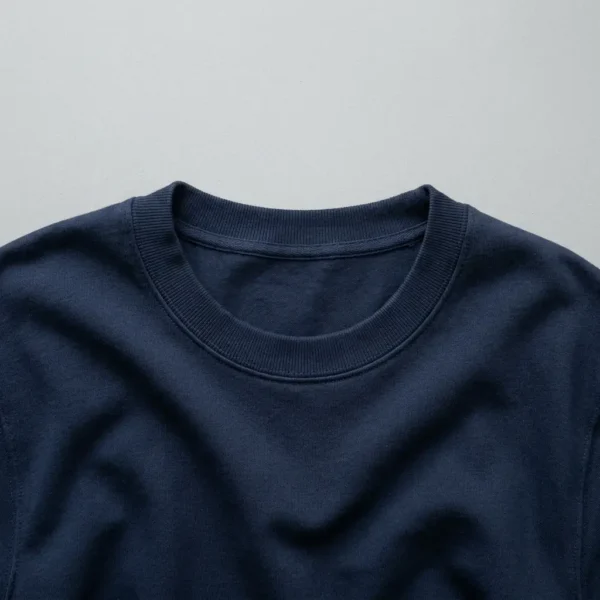
Crewneck
A round band sits close to the base of the neck and leaves the chest open for artwork.
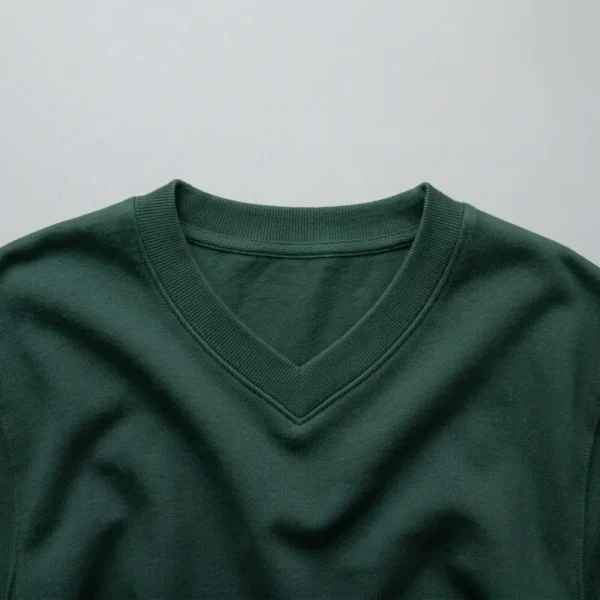
V-neck
The collar dips to a point at the center front, opening up the neckline.
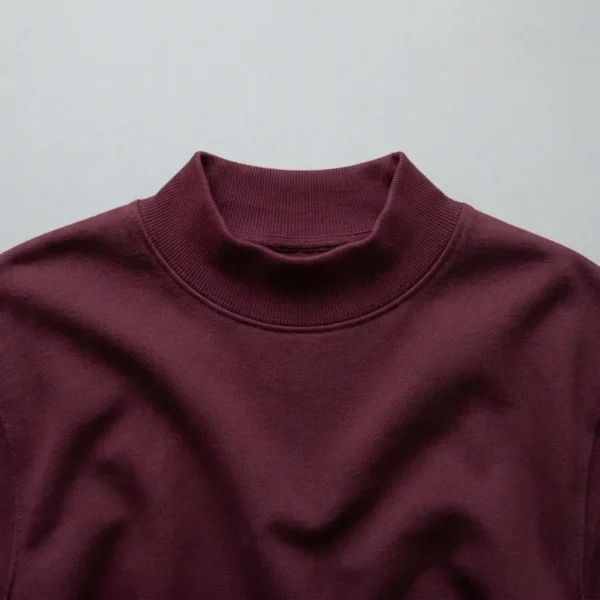
Mock Neck
A short upright band covers the base of the neck without folding over.
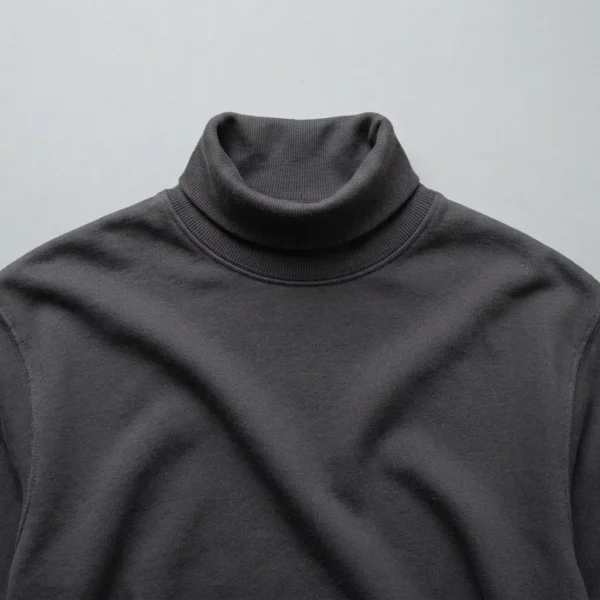
Turtleneck
A tall collar folds back on itself for a double layer around the neck.
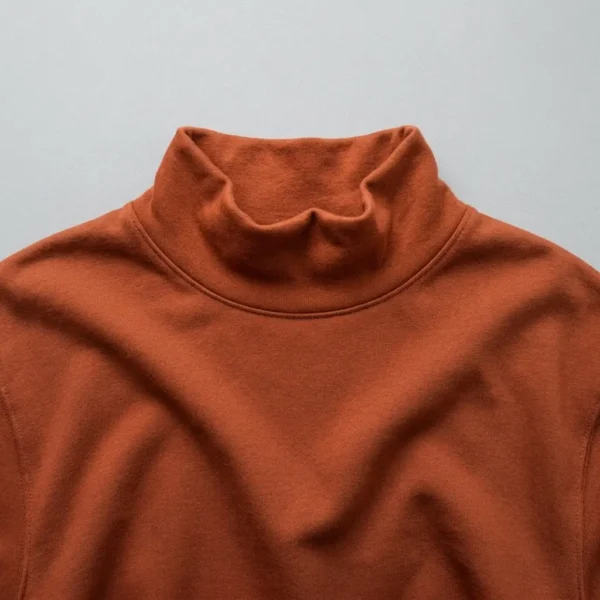
Funnel Neck
A high, open collar stands away from the neck and widens toward the top.
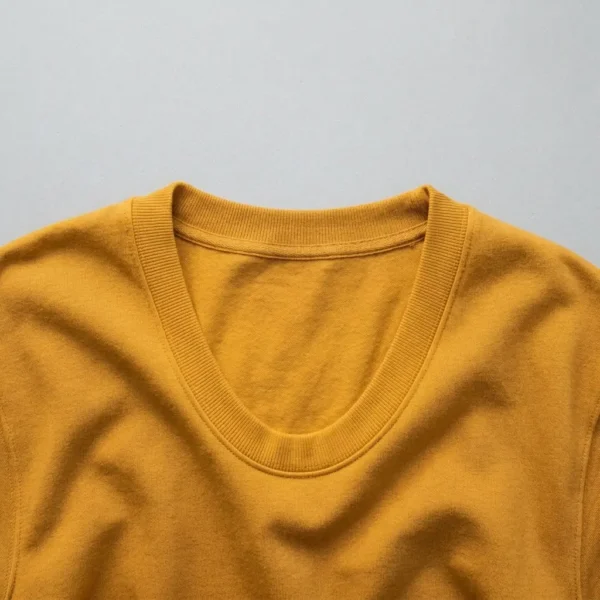
Scoop Neck
A low, rounded curve exposes more of the upper chest than a crewneck.
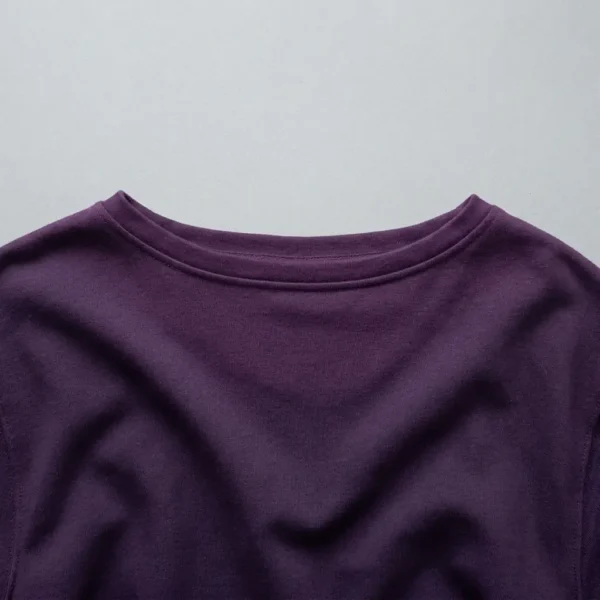
Boat Neck
A wide, shallow neckline runs across the collarbones toward the shoulders.
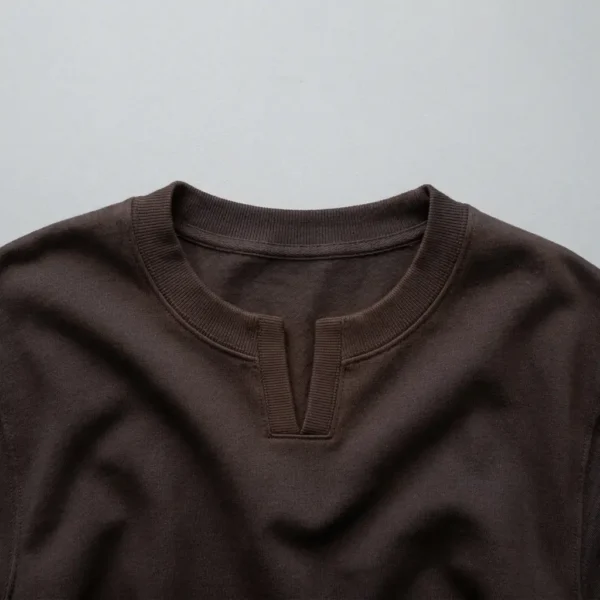
Split Neck
A short slit opens the center front while the rest of the neckline stays close.
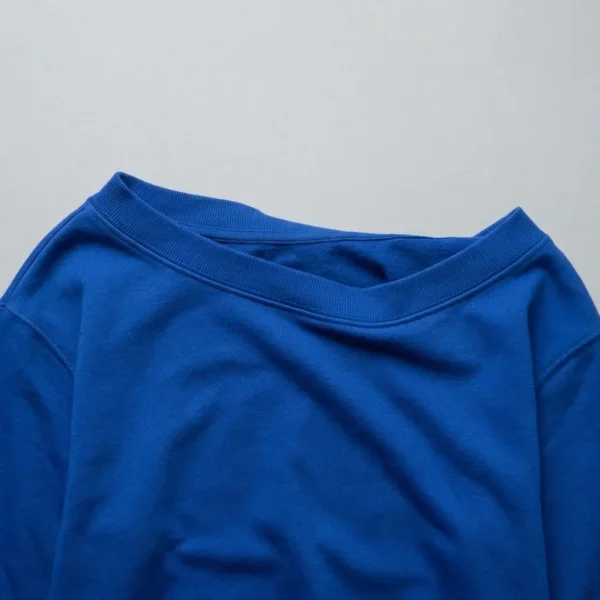
Off-Shoulder Neck
A wide neckline sits below both shoulders.
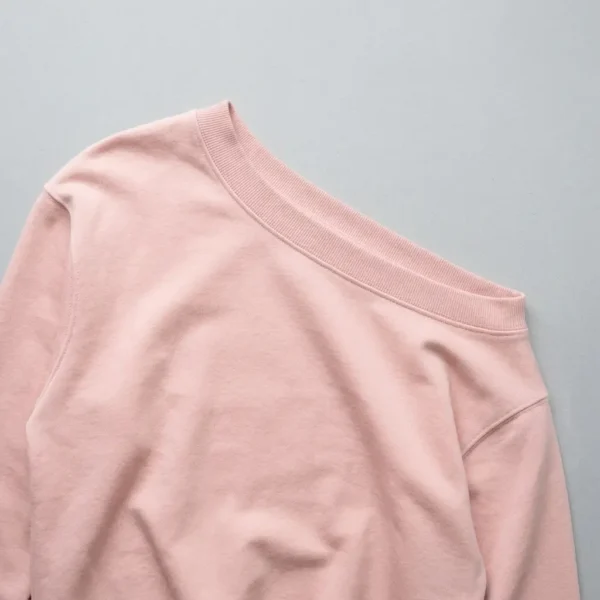
One-Shoulder Neck
An asymmetric neckline covers one shoulder and leaves the other exposed.
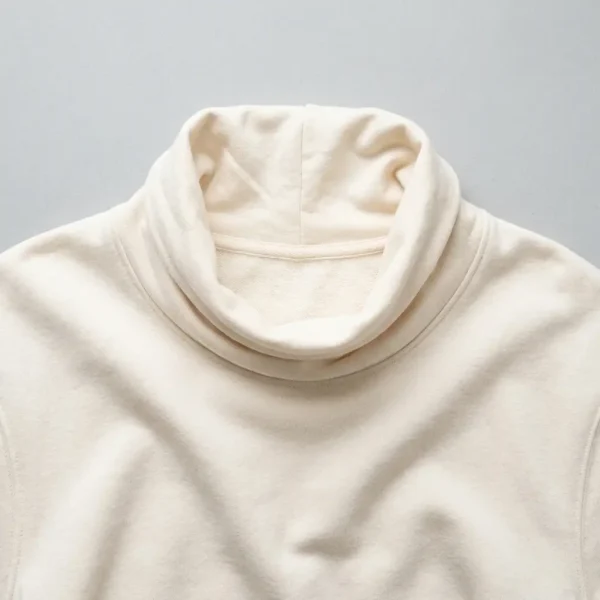
Cowl Neck
Extra fabric falls in soft folds around the neck and upper chest.
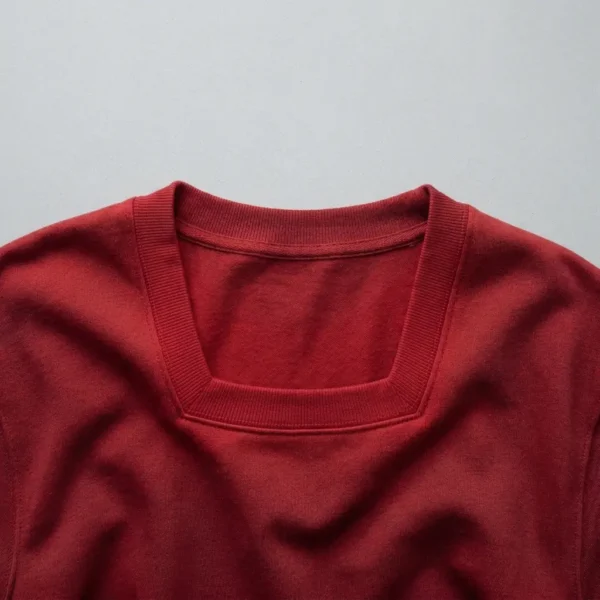
Square Neck
A straight front edge meets upright sides to frame the collarbones.
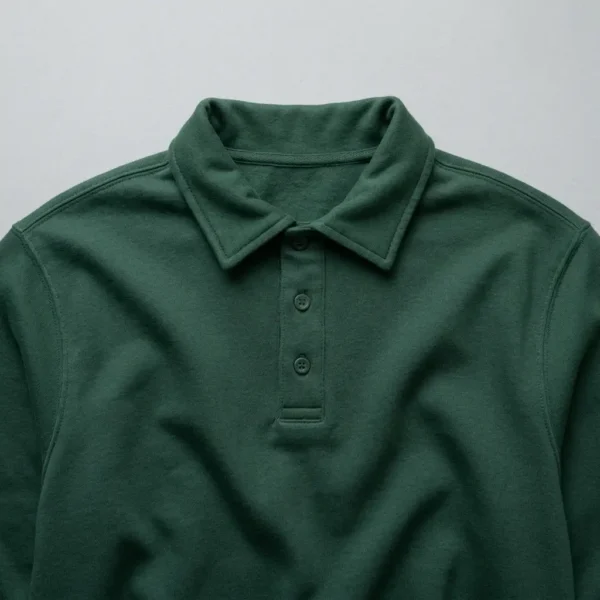
Polo Collar
A fold-down collar with pointed tips gives the neckline a shirt-like finish.
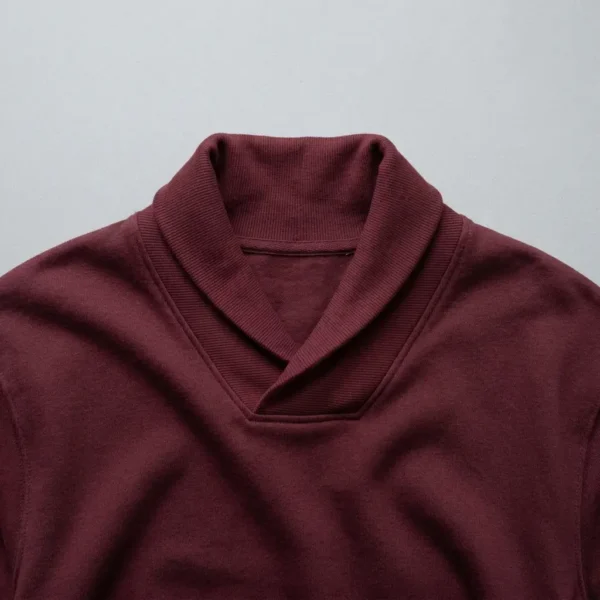
Shawl Collar
A continuous band rolls over around the neck and overlaps at the front.
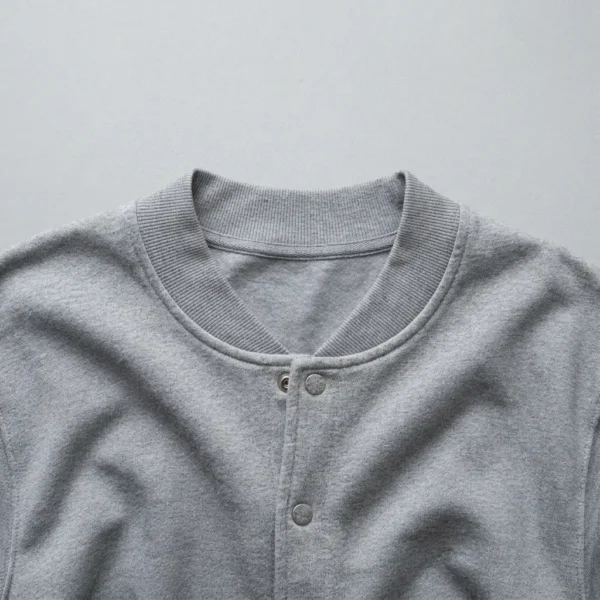
Varsity / Baseball Collar
A short ribbed band stands up at the back and tapers toward the front opening.
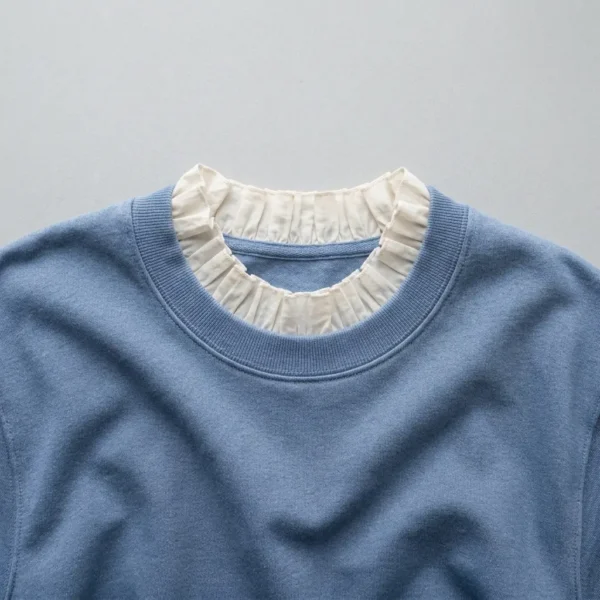
Layered Collar
A second visible collar edge can match the body or add a contrasting color.
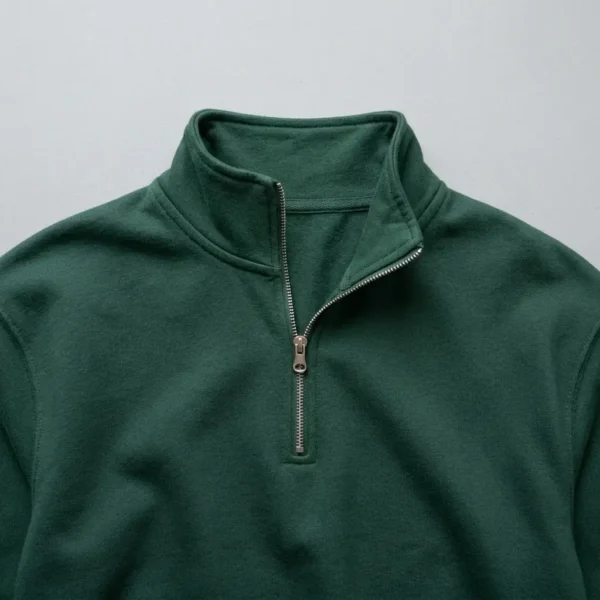
Quarter-zip
A short zipper opens the collar and upper chest.
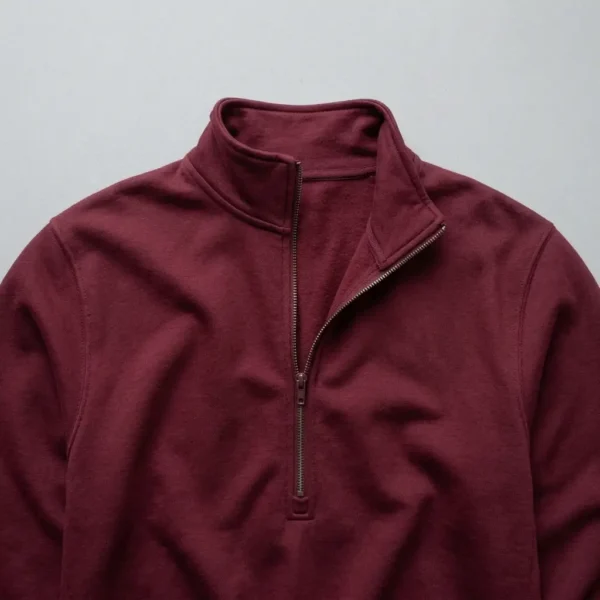
Half Zip
A longer front zipper opens toward the middle of the chest.
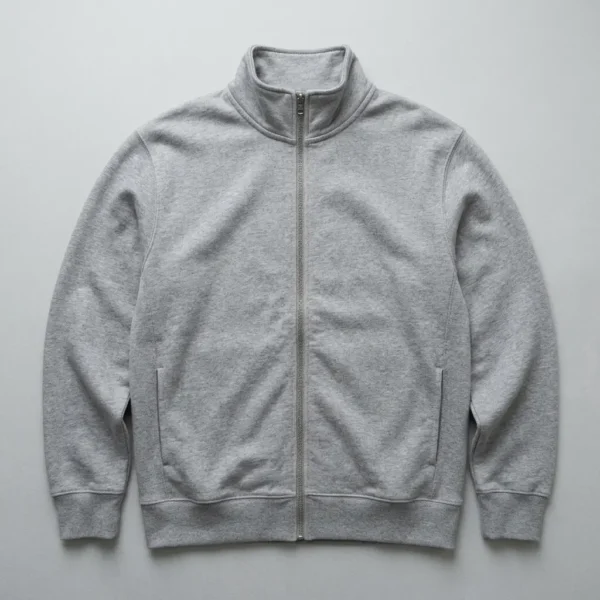
Full Zip
A zipper runs from the collar to the hem so the sweatshirt opens completely.
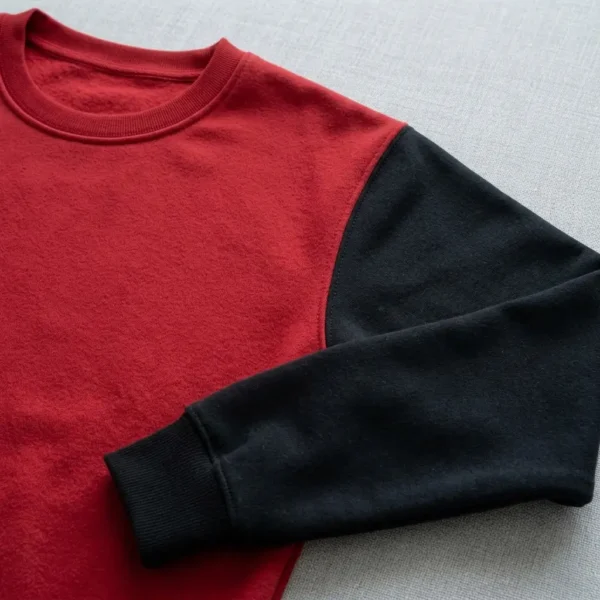
Set-in Sleeves
The sleeve joins the body at the shoulder tip, giving the shoulder a defined outline.
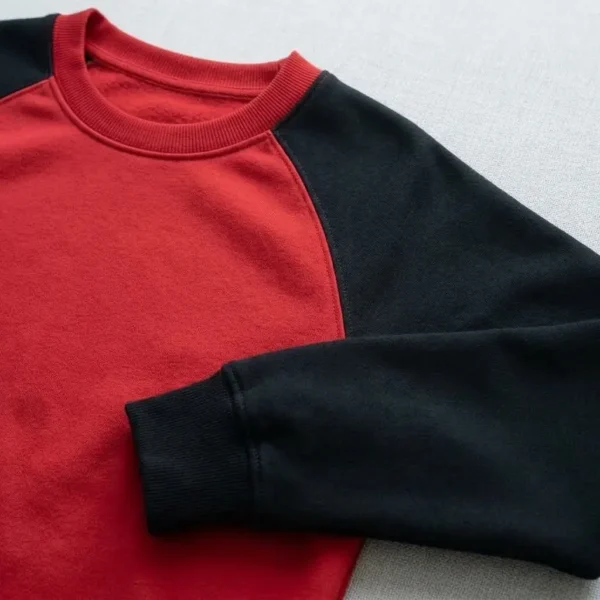
Raglan Sleeves
A diagonal seam runs from the neckline to the underarm and frames the chest.
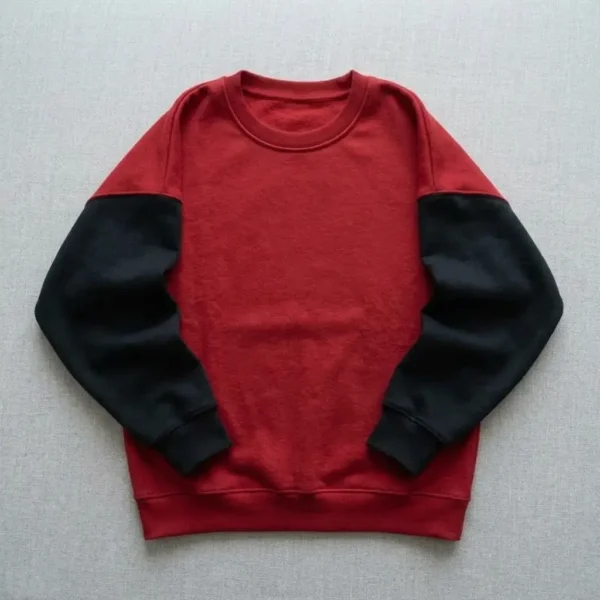
Dropped Shoulder
The shoulder seam sits down the upper arm for a wider, more relaxed outline.
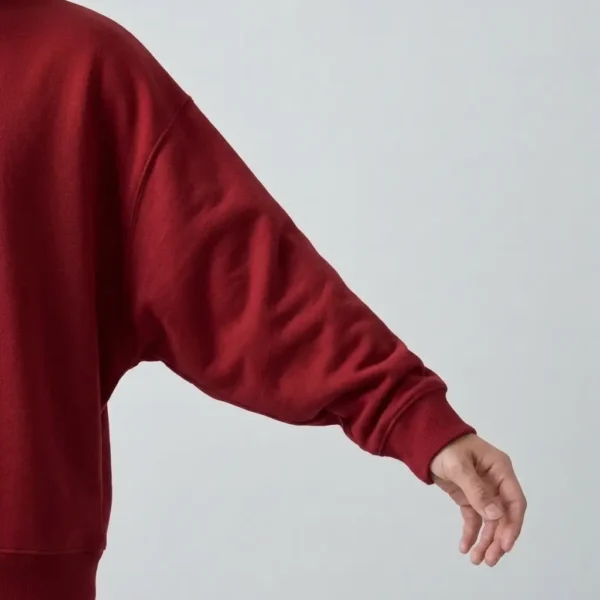
Dolman / Batwing
A deep underarm gives the sleeve a broad sweep that narrows toward the wrist.
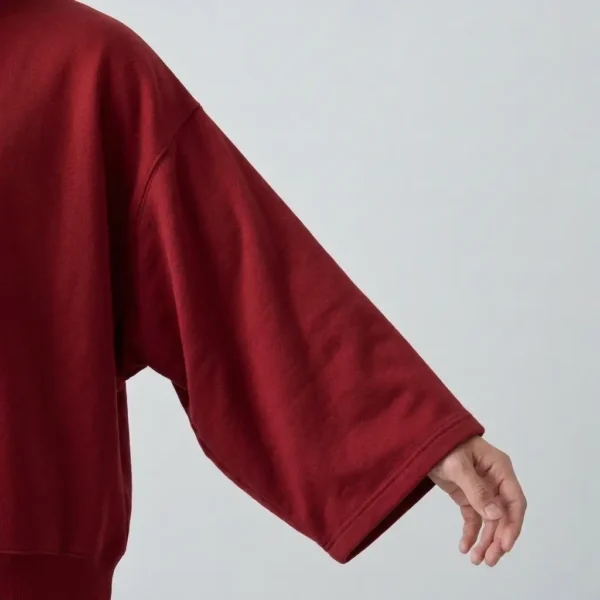
Kimono
The sleeve extends from the body with a broad, straight opening.
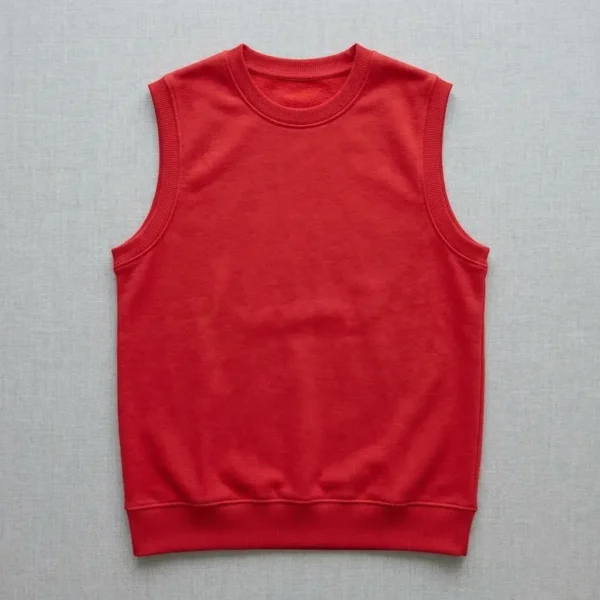
Sleeveless
A finished armhole leaves the shoulder and arm uncovered below its edge.
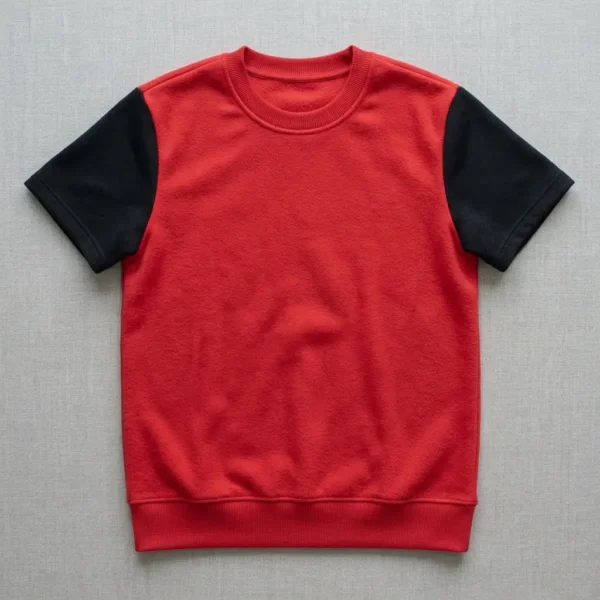
Short Sleeves
The sleeve ends on the upper arm between the shoulder and elbow.
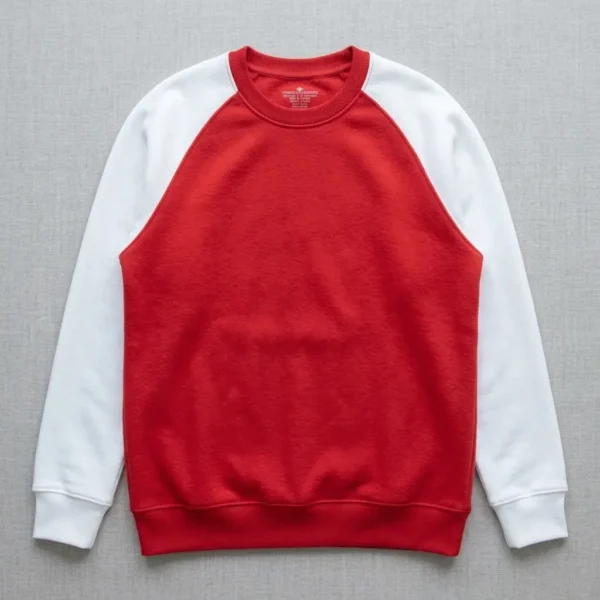
Long Sleeves
The sleeve reaches the wrist for full arm coverage.
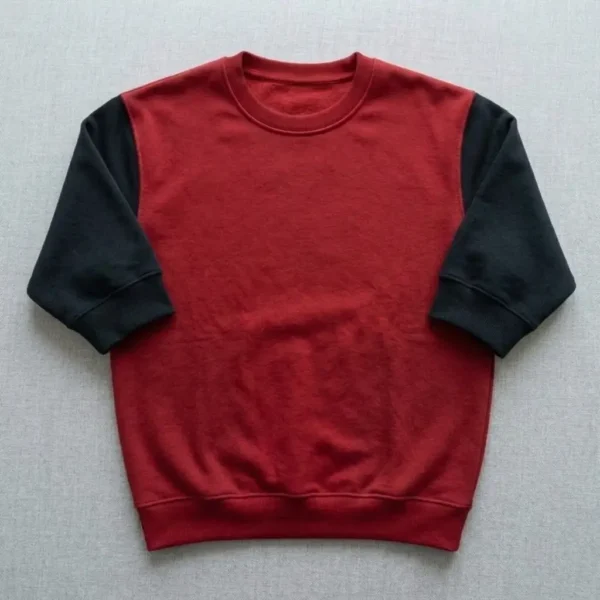
Elbow-Length Sleeves
The opening falls at or near the bend of the elbow.
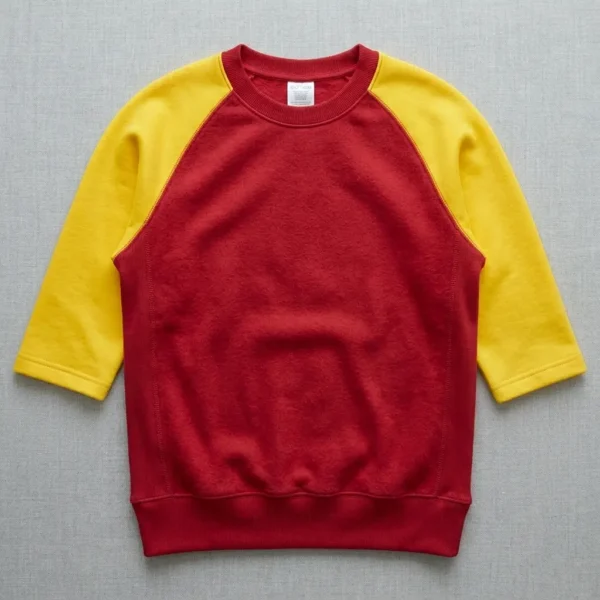
Three-quarter Sleeves
The hem falls between the elbow and wrist, leaving the lower forearm exposed.
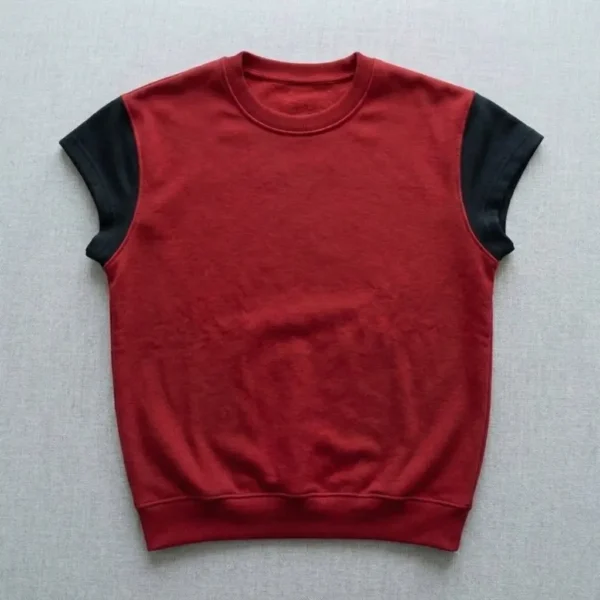
Cap Sleeves
A shallow sleeve covers the shoulder tip and ends high on the upper arm.
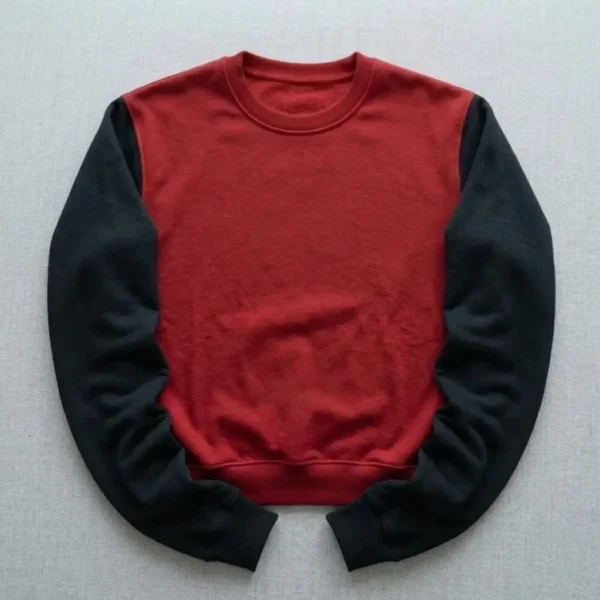
Extra Long Sleeves
Added length extends over the wrist and creates folds when the cuff sits higher.
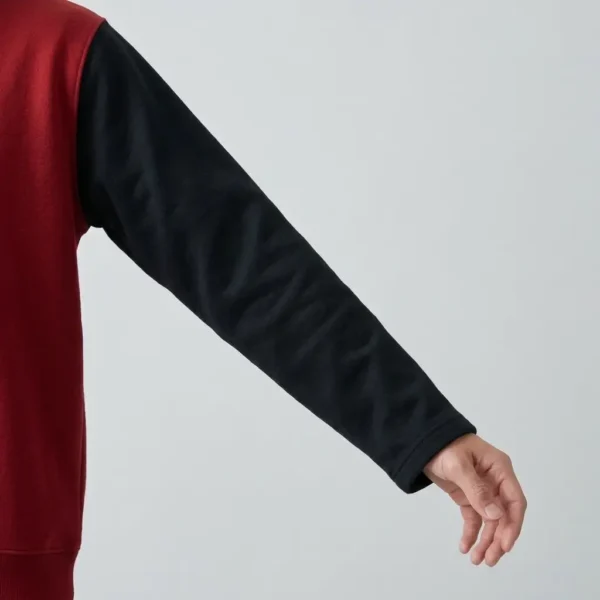
Straight
An even sleeve width gives the arm a clean line from top to bottom.
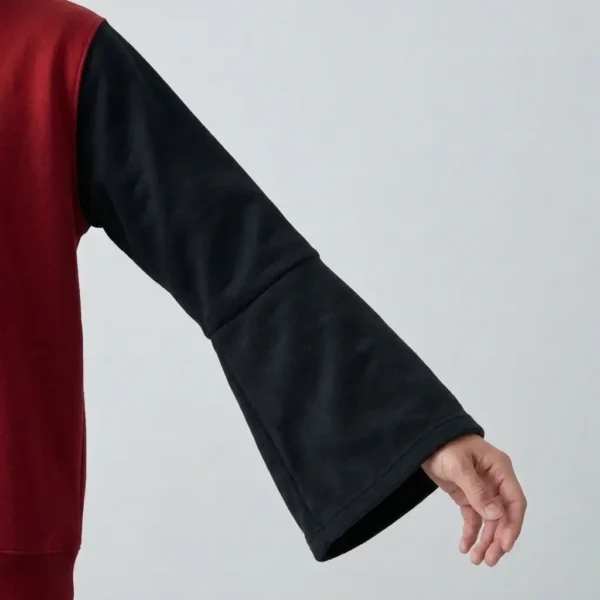
Bell
The sleeve widens toward the wrist and finishes with a flared opening.
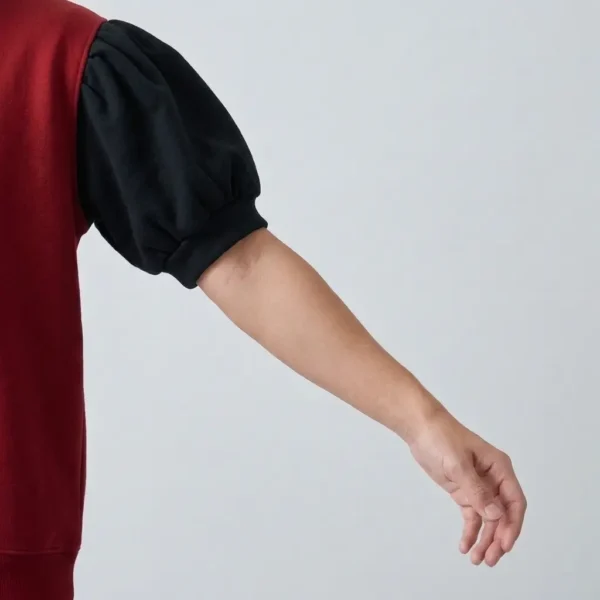
Puff
Gathers at the top of the sleeve create a rounded shoulder with extra volume.
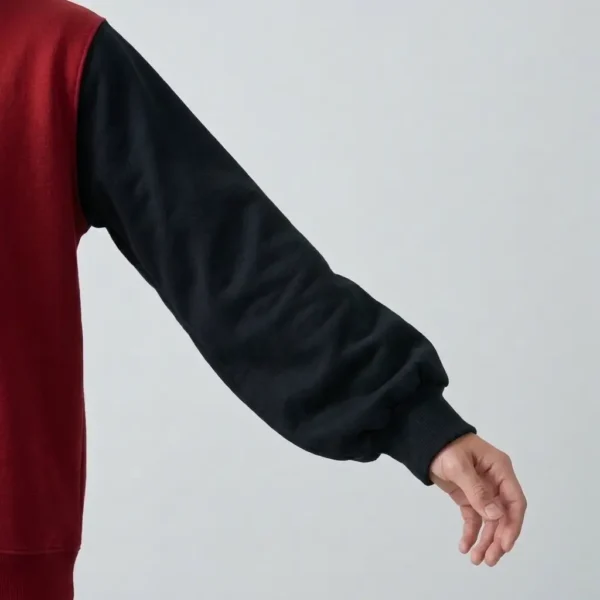
Balloon
A full sleeve gathers into a narrow cuff, creating a rounded shape.
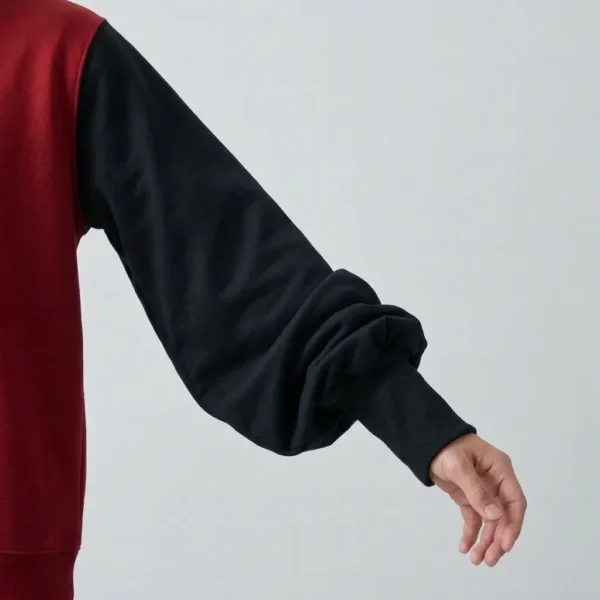
Bishop
The sleeve widens along the forearm and gathers just above the cuff.
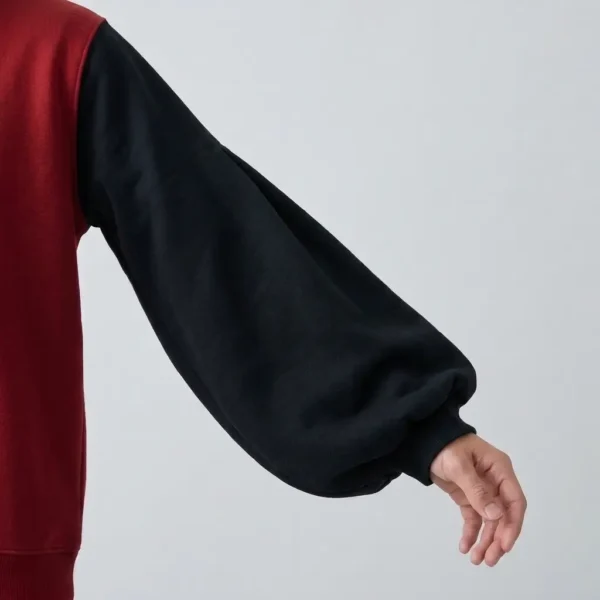
Lantern
Shaped sleeve sections create a rounded middle that narrows again at the opening.
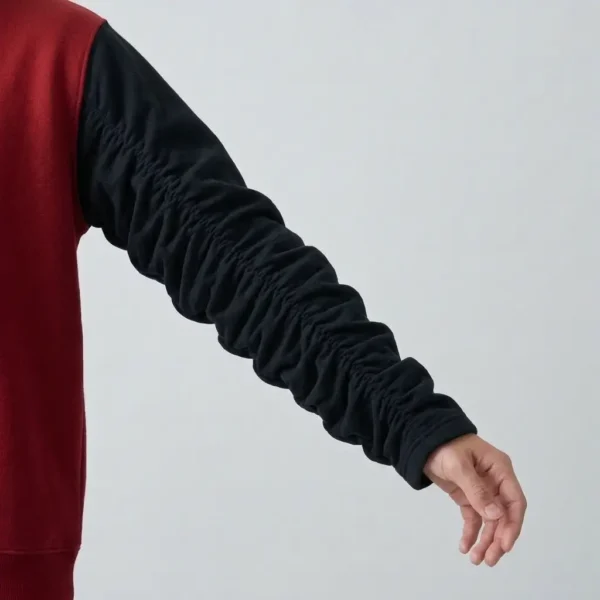
Ruched
Gathered stitching draws the fabric into a row of folds along the sleeve.
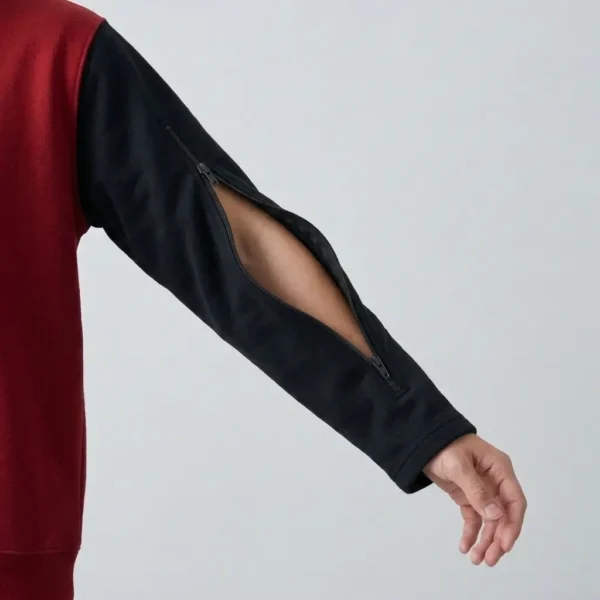
Zipper Sleeve
A zipper opens part of the sleeve to adjust the opening or reveal a layer beneath.
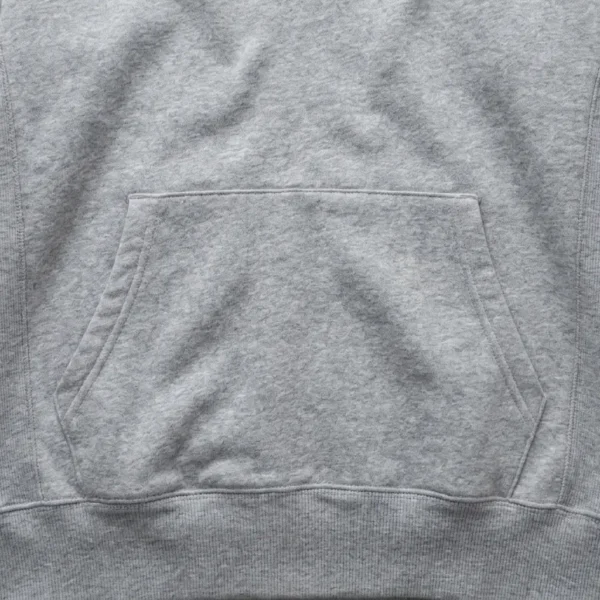
Kangaroo Pocket
One wide front pocket has an opening at either side for both hands.
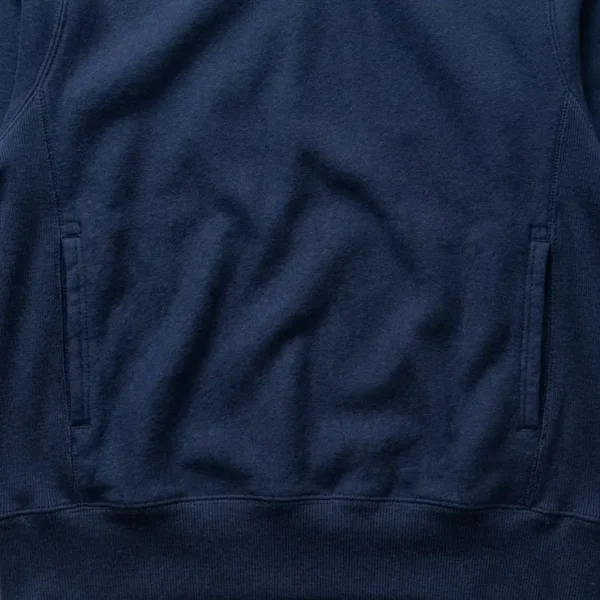
Side-Seam Pocket
The pocket opens along the side seam, leaving the sweatshirt front uninterrupted.
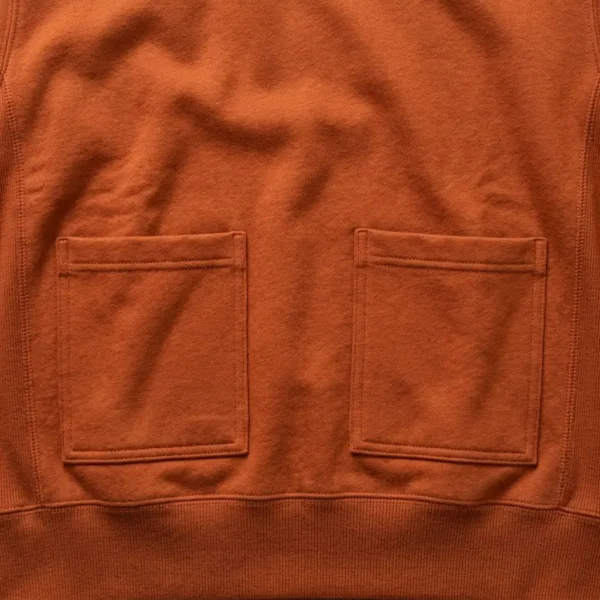
Simple Patch Pocket
A piece of fabric sewn onto the outside creates a visible pocket outline.
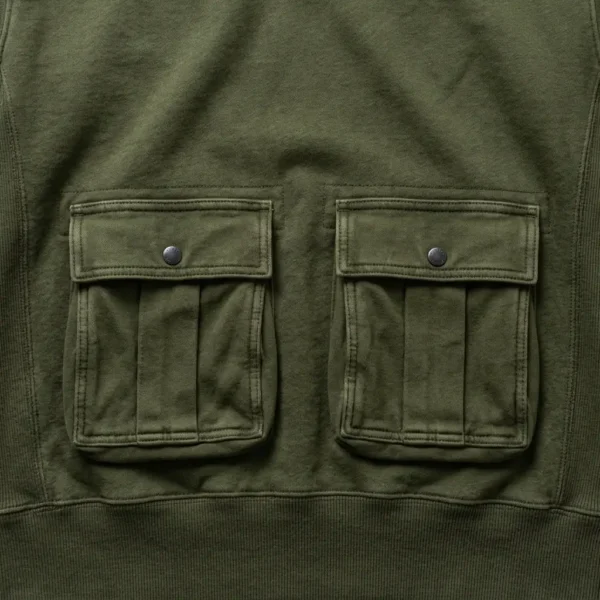
Cargo Pocket
A roomy outer pocket adds storage, with a flap over the opening.
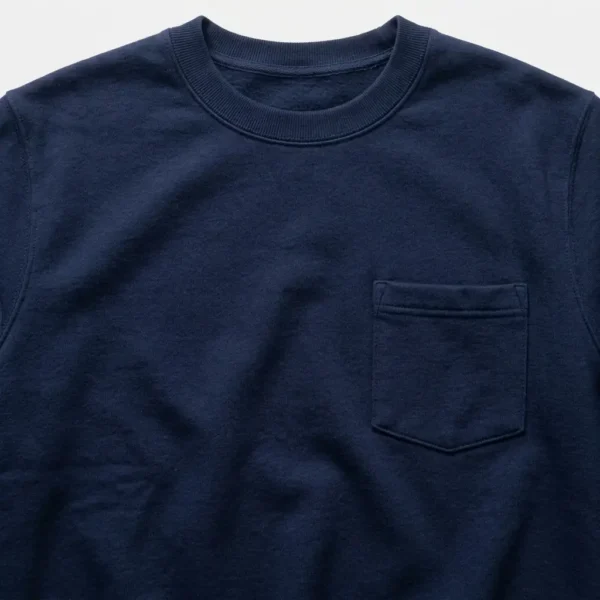
Chest Pocket
A small pocket sits high on the front and can carry a contrasting dye pattern.
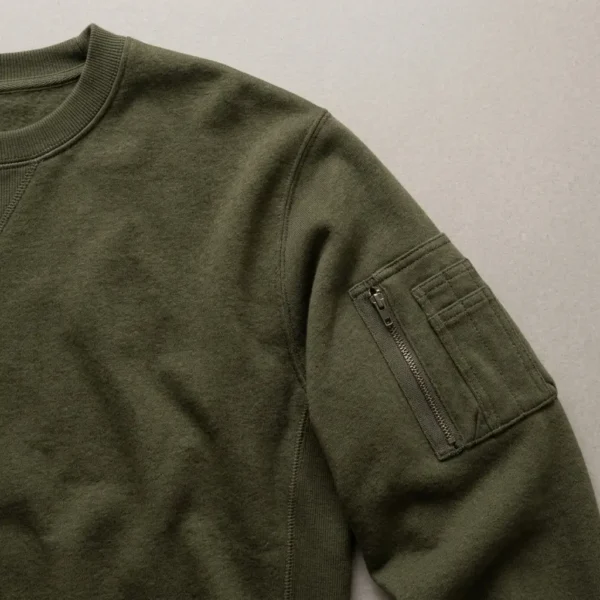
Sleeve Utility Pocket
A pocket on the arm provides storage while keeping the chest clear for artwork.
Open / No Closure
Open pocket with no added closure, keeping the opening simple and easy to access.
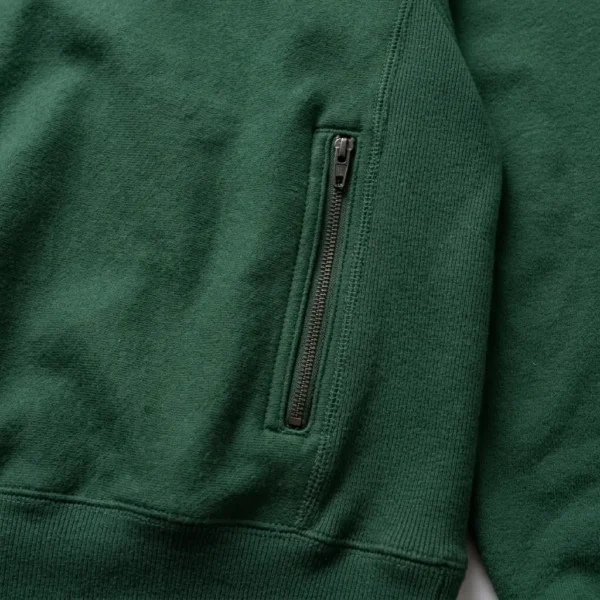
Zipper Closure
A zipper closes the pocket along its opening and helps keep small items inside.
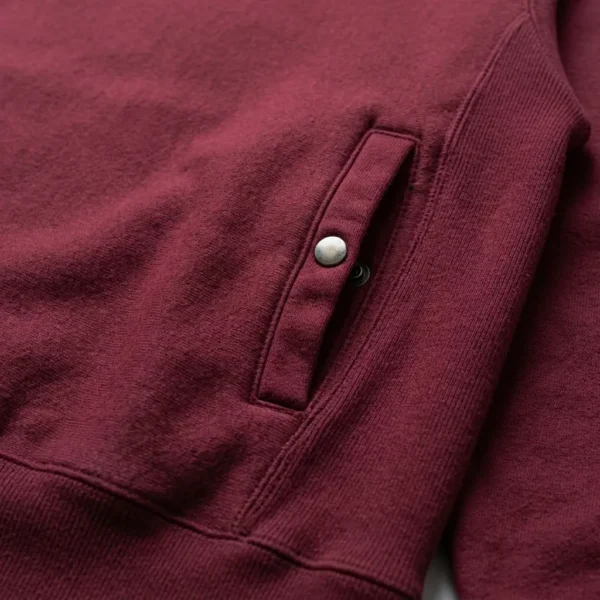
Snap Closure
A press stud holds the pocket closed and pulls open with one hand.
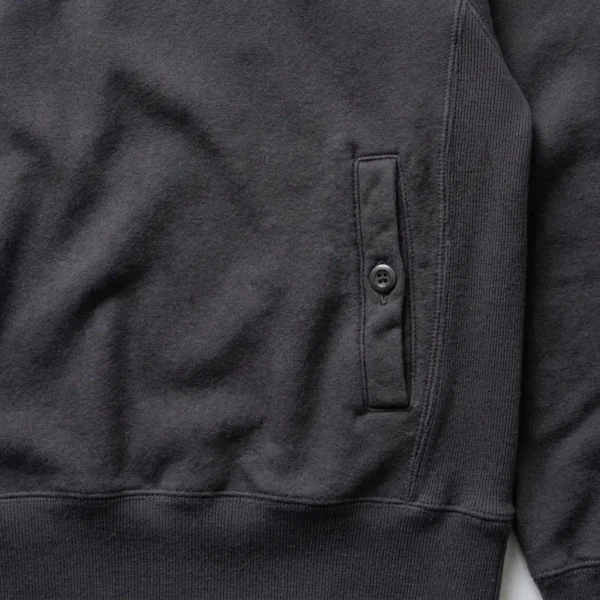
Button Closure
A button passes through a buttonhole to secure the pocket opening or flap.
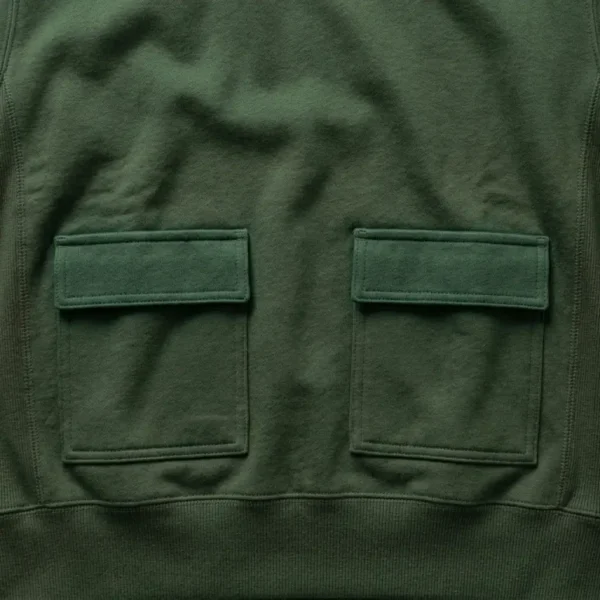
Flap Closure
A fabric cover folds over the top of the pocket.
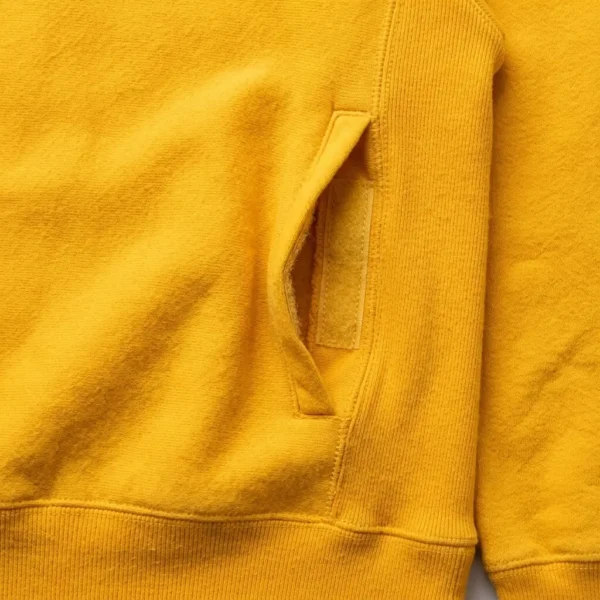
Hook-and-Loop Closure
Two fastening strips press together to close the pocket and peel apart to open it.
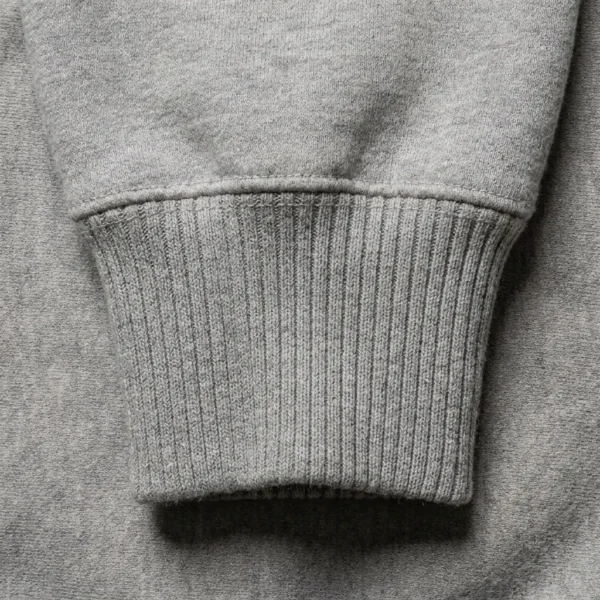
1x1
Single knit and purl stitches alternate to make fine, evenly spaced ribs.
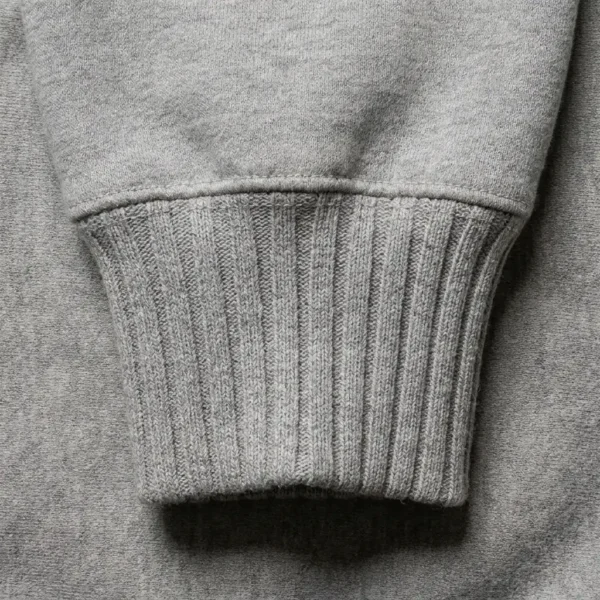
2x2
Pairs of knit and purl stitches create wider, equally spaced ridges.
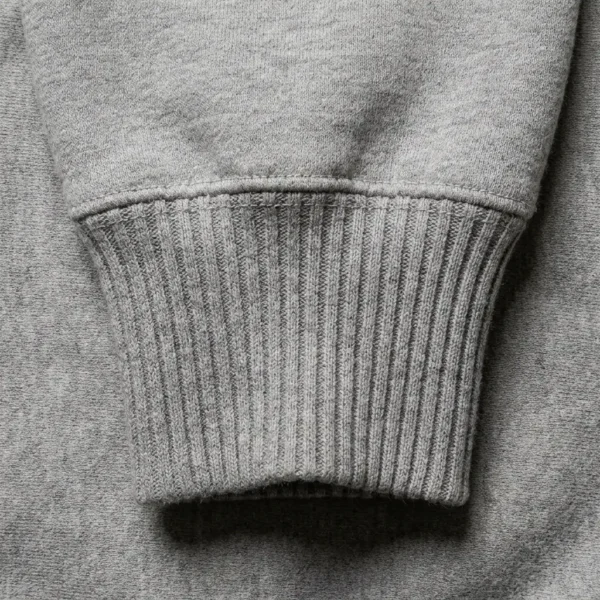
2x1
Two knit stitches alternate with one purl stitch, giving the face wider ridges and narrow grooves.
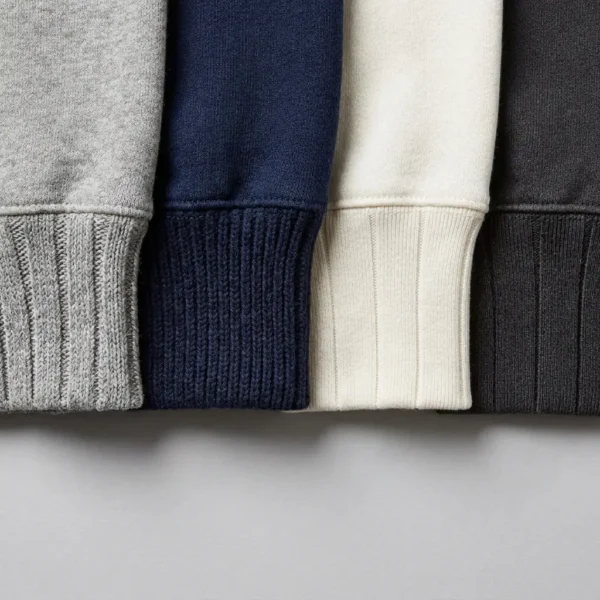
Custom
The ridge width, spacing, and yarn can vary to suit the neckline, cuffs, or waistband.
Matching
Matching rib cuffs in the same color as the sweatshirt body for a clean, coordinated look.
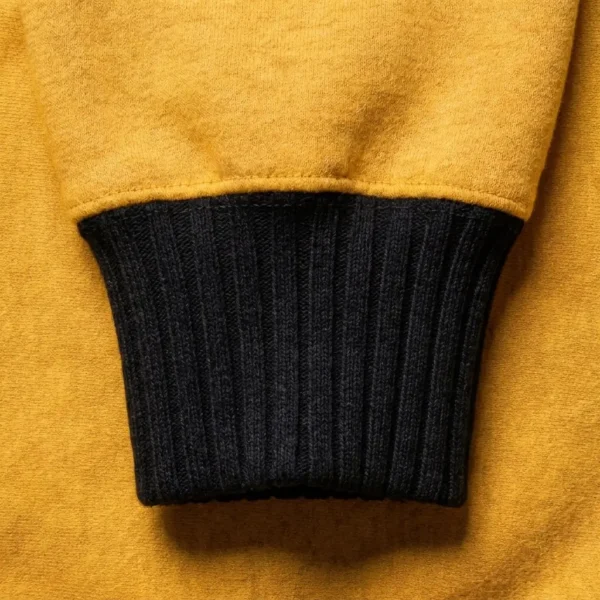
Contrast
A different color at the neck, wrist, or waist frames the dyed body.
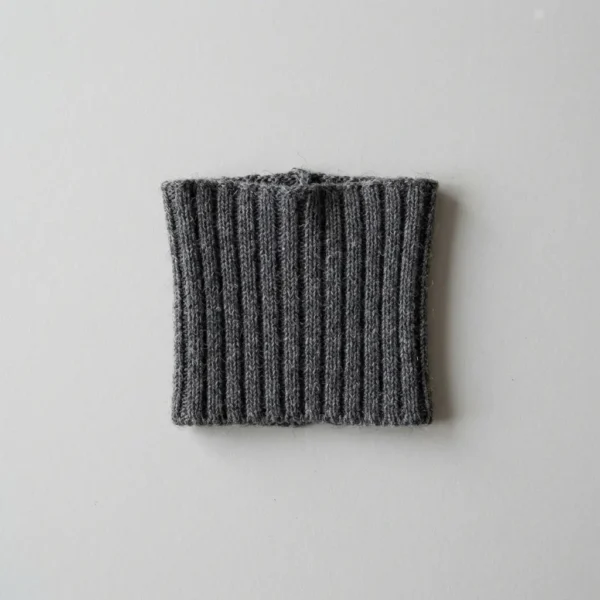
Single-layer
One thickness of rib knit keeps the band lighter and less bulky.
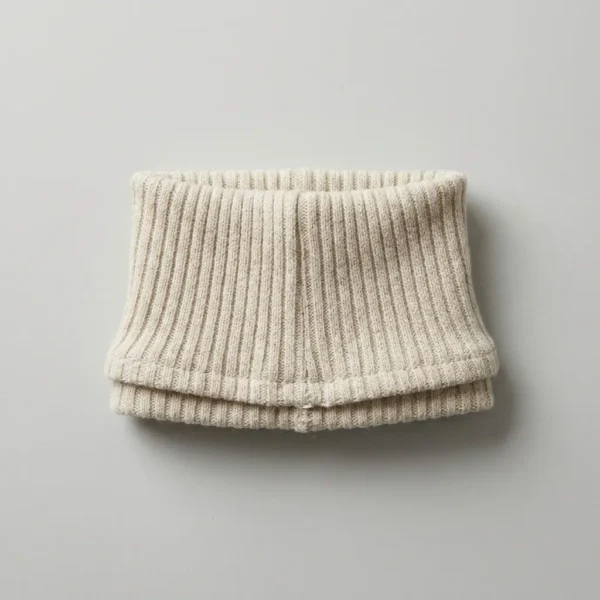
Folded / Double-layer
The rib folds back on itself for a thicker band with a smooth outer edge.
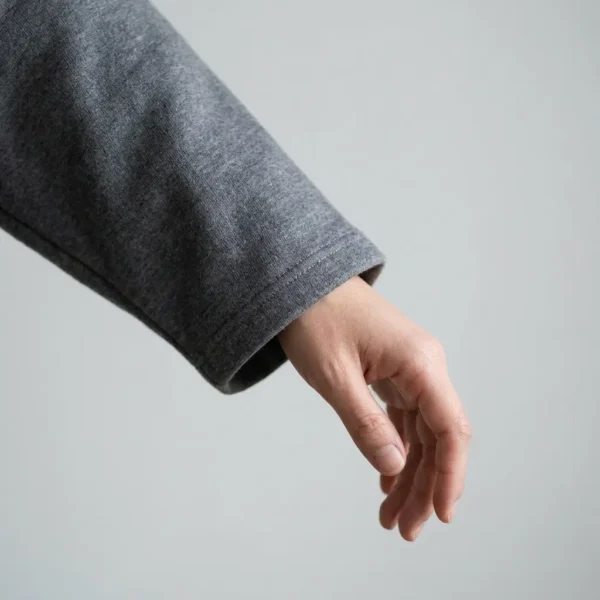
Open Hem
The sleeve ends in a hem with no separate band to draw it in.
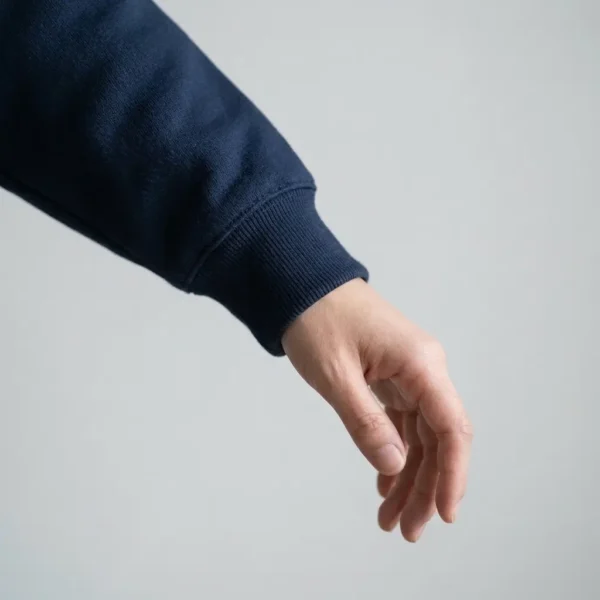
Ribbed Cuff
A stretchy rib-knit band draws the opening in around the wrist.
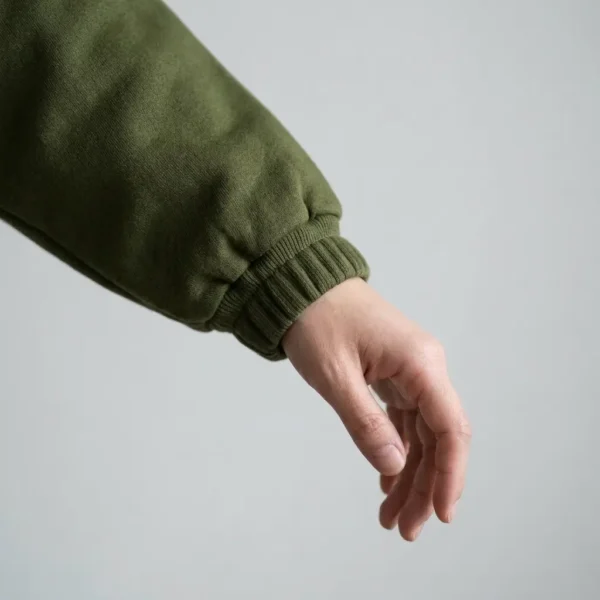
Elasticated Cuff
Elastic inside the sleeve opening gathers the fabric at the wrist.
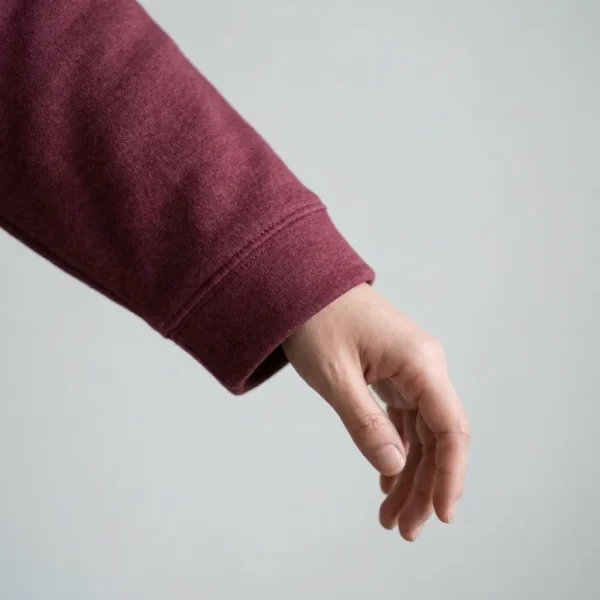
Self-Fabric Cuff
A band of the same fabric as the sleeve gives the wrist a matching surface.
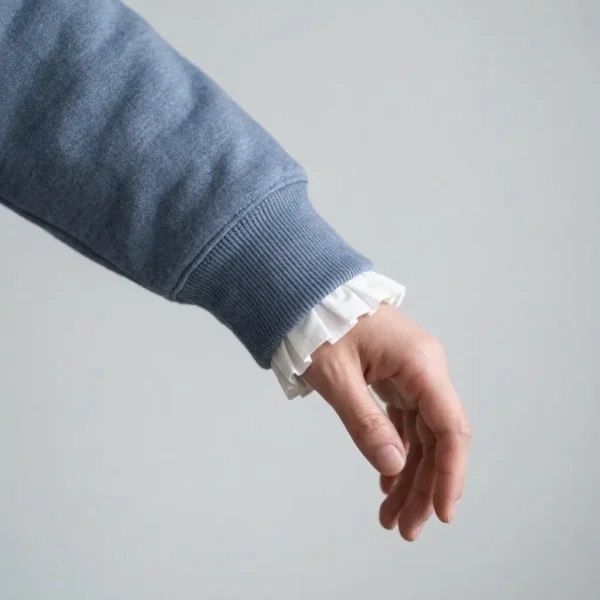
Layered Cuff
Two visible cuff edges add depth or show a second color at the wrist.
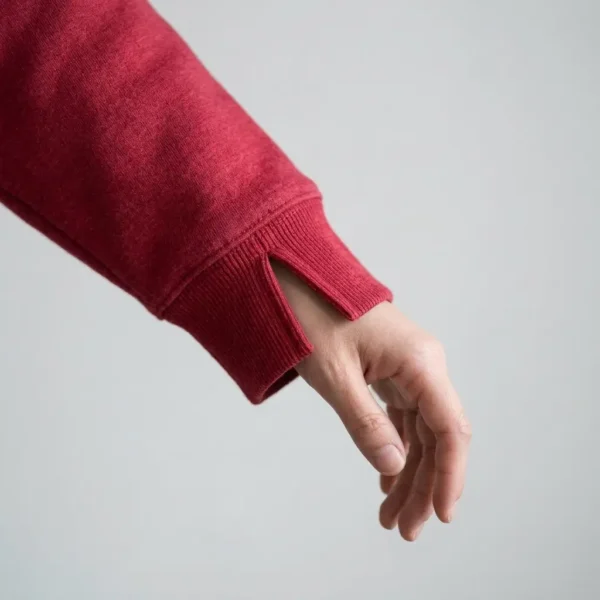
Split Cuff
A short slit lets the cuff open slightly as the hand moves.
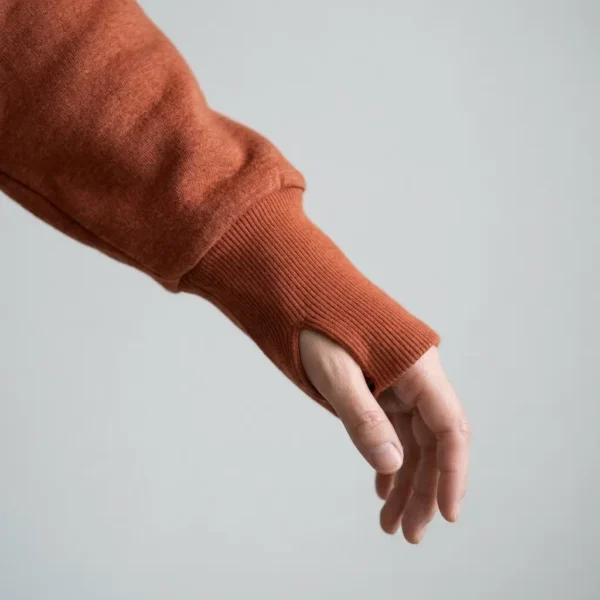
Thumbhole Cuff
A thumb opening holds the cuff over part of the hand.
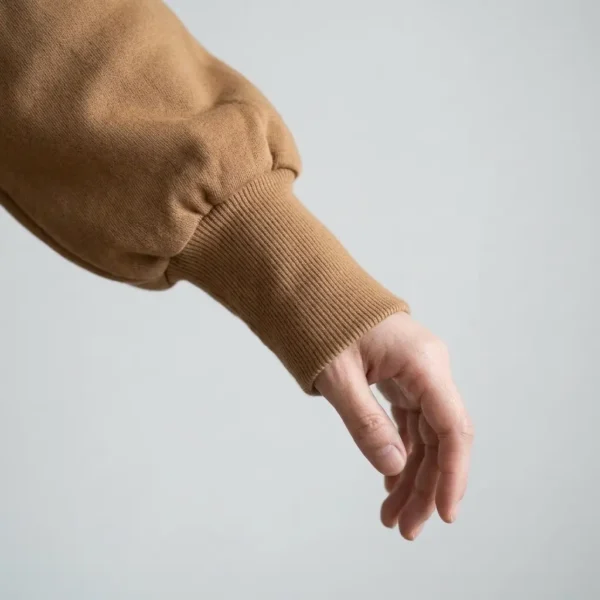
Extended / Long Cuff
A taller cuff covers more of the wrist and lower forearm.
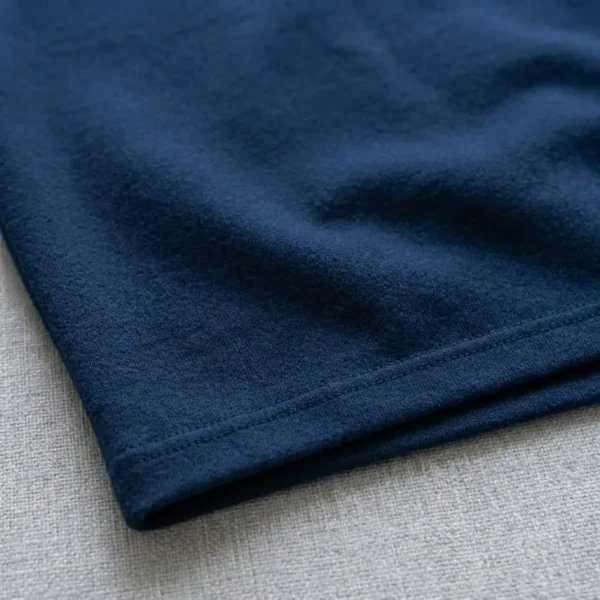
Straight / Open Hem
A level hem falls freely around the hips without a separate waistband.
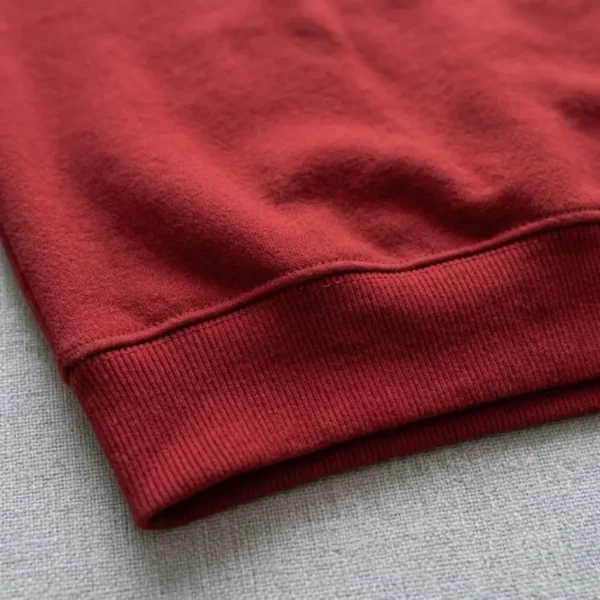
Ribbed Hem / Waistband
Stretch rib gathers the lower edge and holds it closer to the body.
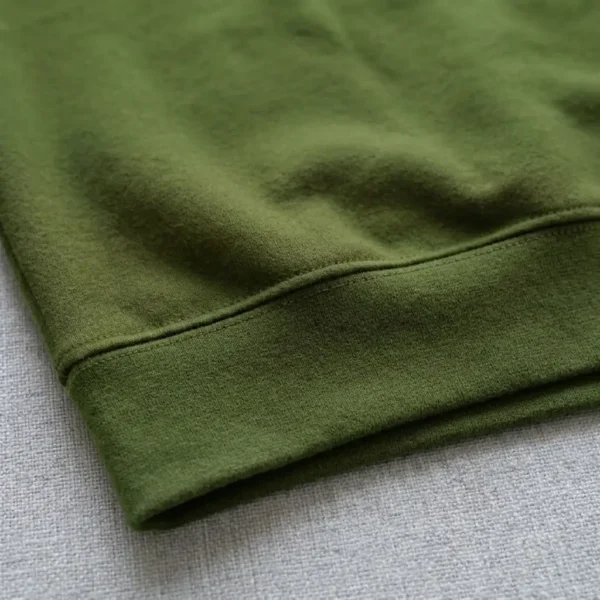
Self-Fabric Banded Hem
A band cut from the sweatshirt fabric finishes the bottom in the same texture.
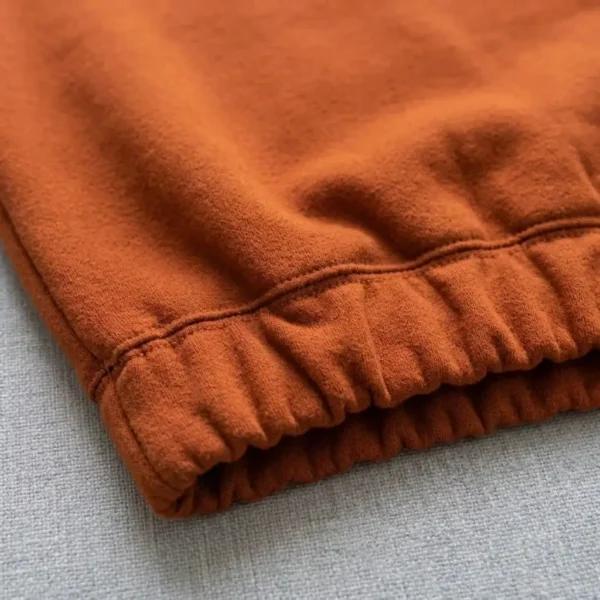
Elasticated Hem
Elastic gathers the lower edge so the sweatshirt sits closer to the waist.
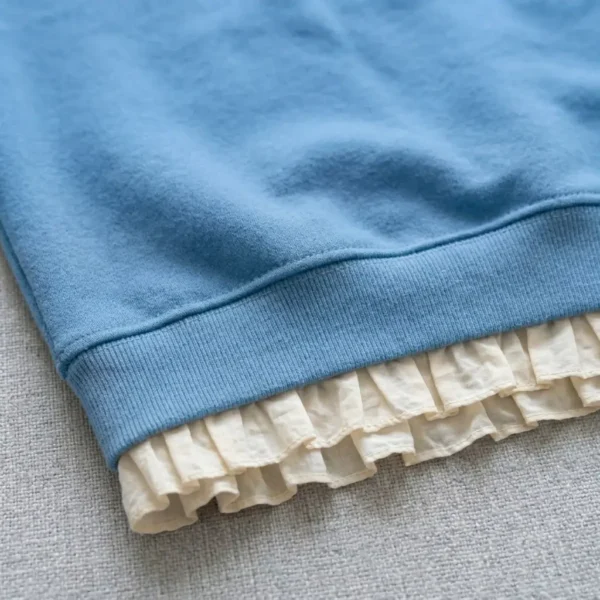
Layered Hem
A second visible edge below the main hem adds length or a line of contrast.
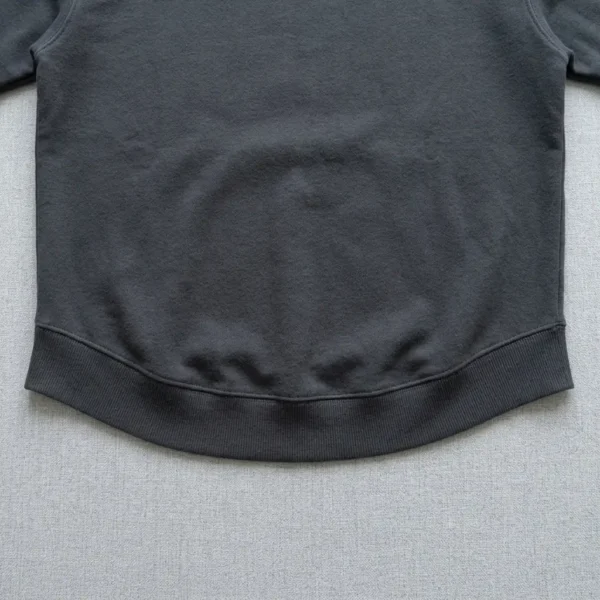
Curved Hem
The lower edge follows a rounded line across the body.
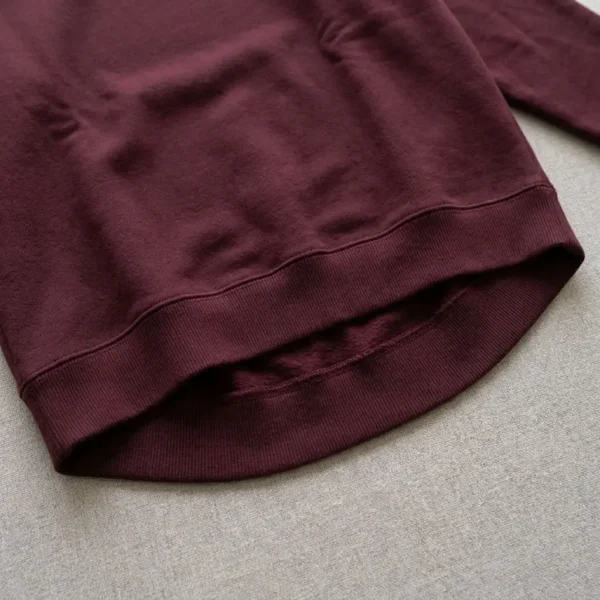
Drop-Tail Hem
The back hem extends below the front for extra coverage.
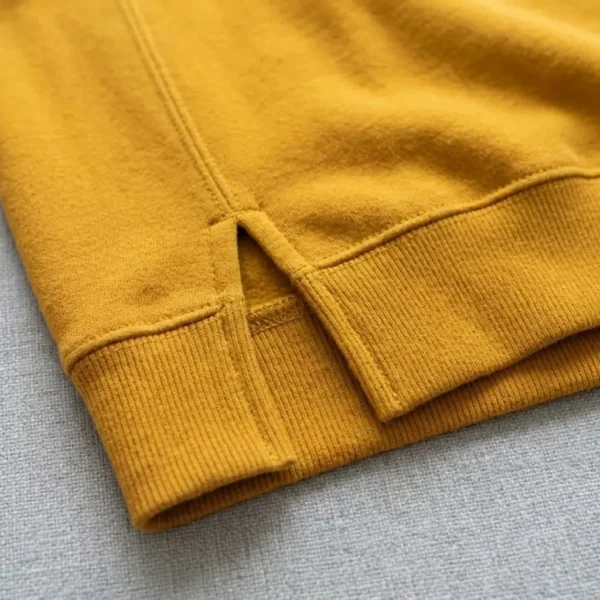
Split Hem / Side Slits
Short openings at the side seams let the hem spread over the hips.
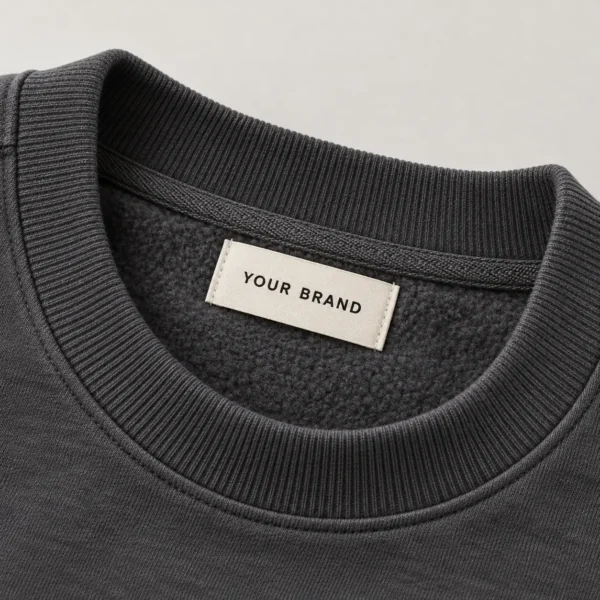
Woven Neck Labels
A woven brand label sits inside the back neckline.
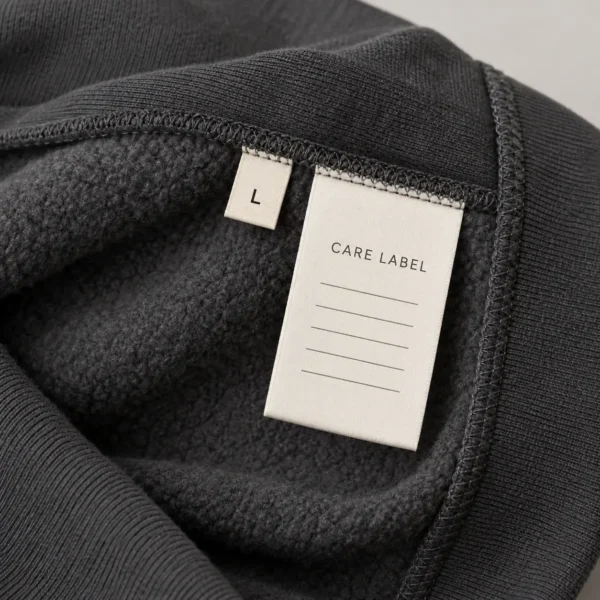
Care & Size Labels
Inside labels identify the garment size and carry care instructions for the fabric and decoration.
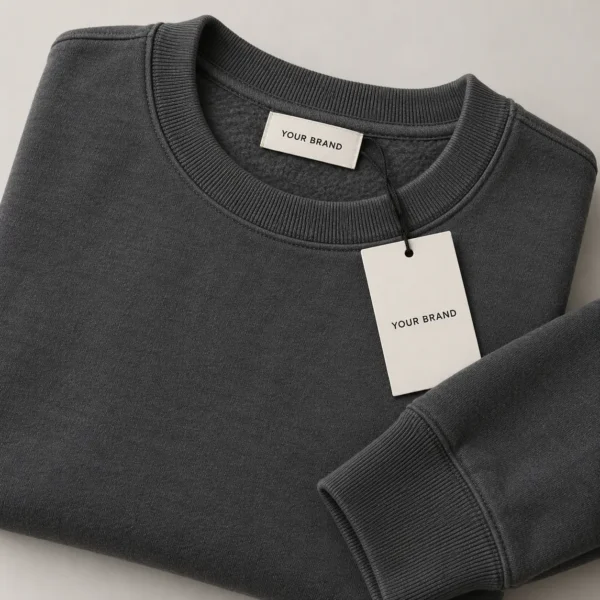
Custom Hang Tags
A removable tag carries branding or product information for retail display.
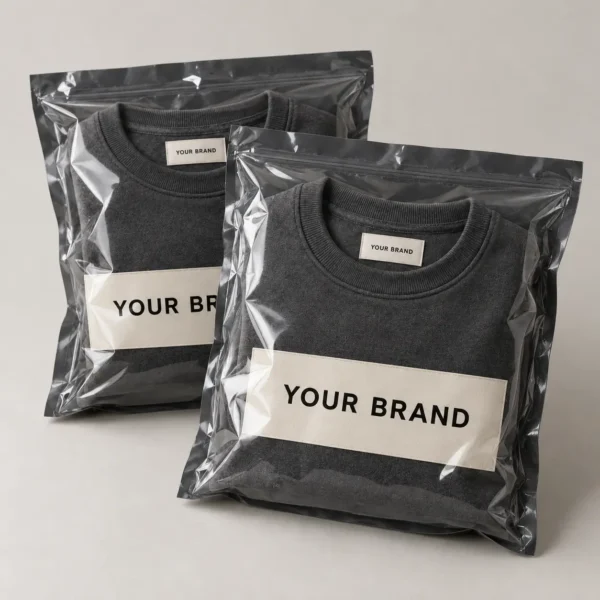
Branded Poly Bags
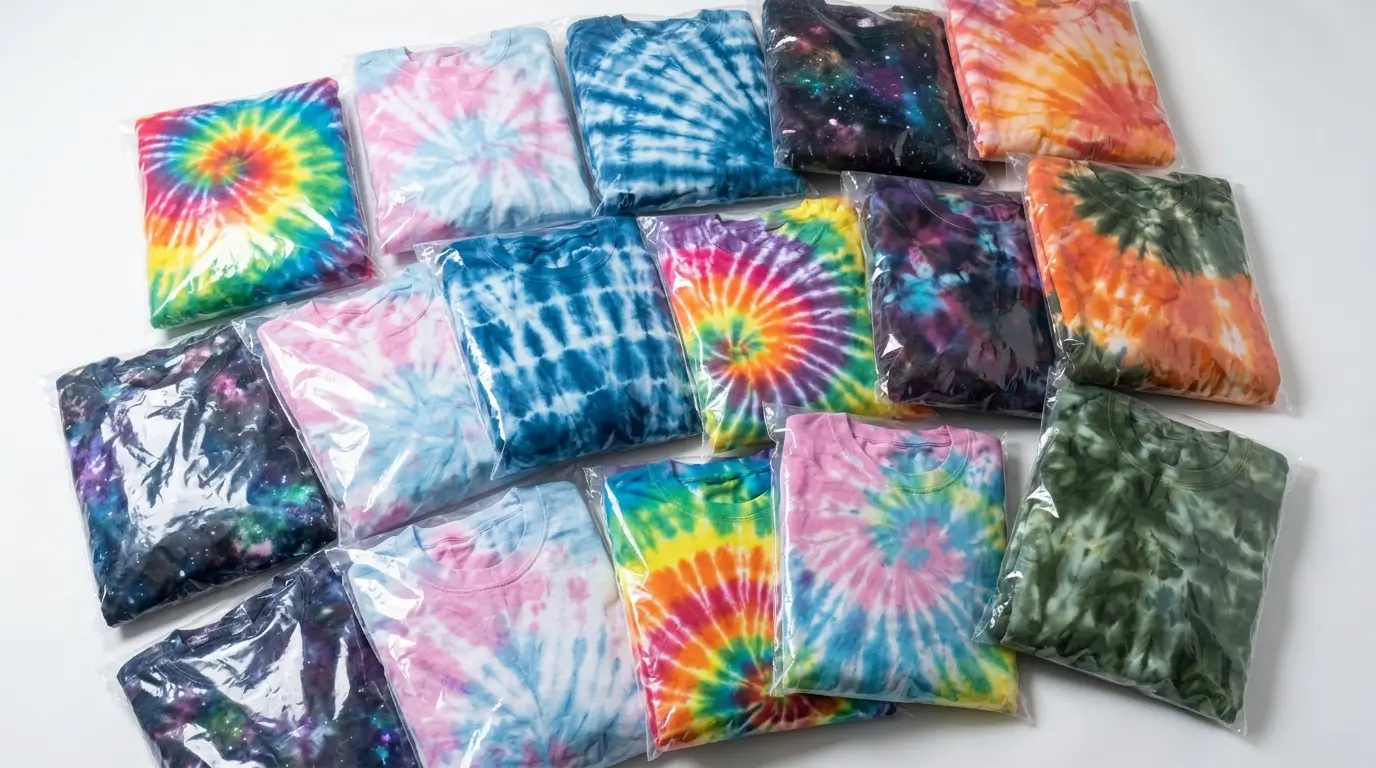
An individual bag displays the brand and keeps each folded sweatshirt together for packing.